

Oil Tanker Passes Blockaded Hormuz Strait, Arrives in South Korea
Translated from Malay, summarized and contextualized by DistantNews.
TLDR
- An oil tanker carrying one million barrels of crude oil has arrived in South Korea, marking the first such vessel to pass through the Strait of Hormuz since Iran declared it closed.
- The arrival of the Malta-flagged Odessa is expected to ease energy security concerns in South Korea, which relies heavily on imports from West Asia.
- The tanker passed through the Strait on April 17 amid a temporary easing of blockades, despite ongoing conflict and retaliatory attacks between the US and Iran.
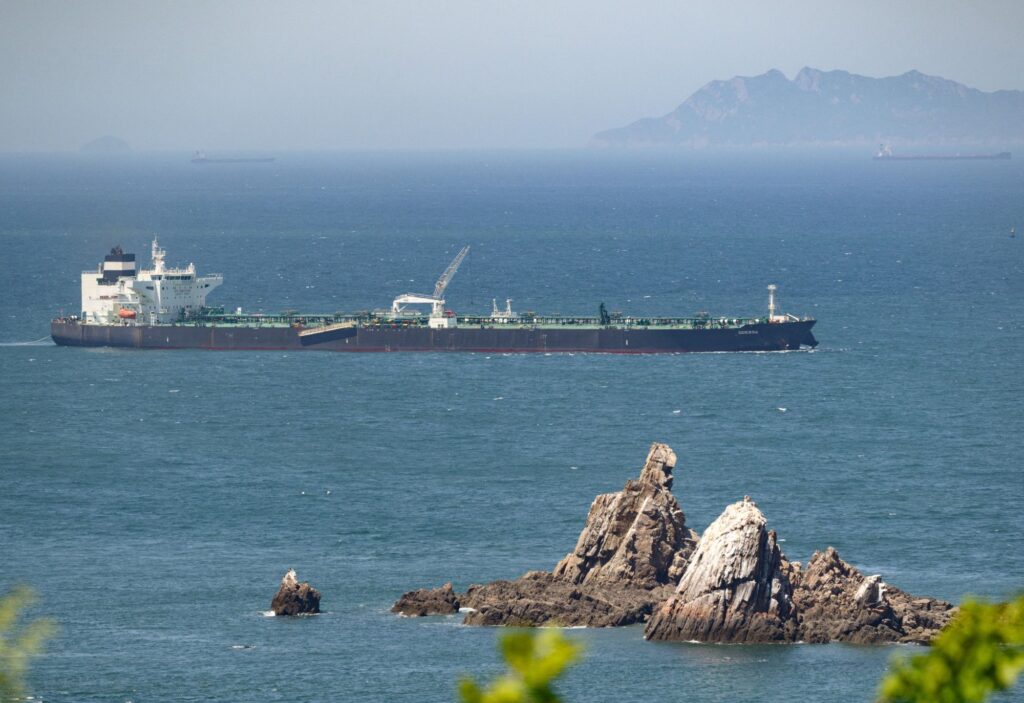
A significant development for South Korea's energy security unfolded Friday as the oil tanker Odessa, carrying one million barrels of crude oil, arrived in the country. This marks the first time a vessel of its kind has reached South Korea via the Strait of Hormuz since Iran effectively closed the strategic waterway. South Korea's heavy reliance on fuel imports from West Asia makes the passage through Hormuz crucial, and its closure had heightened concerns, especially with the ongoing conflict in the region.
A oil tanker that successfully passed the Strait of Hormuz arrived in South Korea on Friday, becoming the first such ship to reach the Asian country via the route since Iran declared the strategic maritime route closed.
The arrival of the Odessa, flagged in Malta, is seen as a welcome development that should help stabilize the nation's energy supply. The one million barrels of crude oil it carries are equivalent to nearly half of South Korea's daily oil consumption. This cargo will undergo processing at refineries before being distributed to the market as petroleum products like gasoline and diesel, according to industry sources. The successful transit is particularly noteworthy given the volatile situation in the Persian Gulf.
The arrival of the Malta-flagged Odessa, carrying one million barrels of crude oil, is expected to ease Seoul's energy security concerns as the war in West Asia continues.
According to an AFP source, the Odessa navigated the Strait of Hormuz on April 17, a period that saw a temporary relaxation of blockades. This passage occurred despite the broader context of escalating tensions and retaliatory attacks between the United States and Iran in the region. The conflict has significantly disrupted shipping routes through the Strait, impacting global trade and energy flows. South Korea, a major petrochemical producer and oil refiner, has been actively seeking to diversify its oil supply sources.
The large vessel was seen around 10:00 AM (local time) near a mooring facility off the coast of Seosan, according to AFP journalists.
In response to the disruptions, South Korea has implemented fuel price controls for the first time in nearly three decades and secured over 270 million barrels of crude oil through unaffected routes, sufficient for more than three months of its needs. The United Nations' International Maritime Organization Secretary-General, Arsenio Dominguez, reported that approximately 1,500 ships and 20,000 international crew members are trapped in the Gulf region due to the conflict. While US President Donald Trump reportedly launched a brief naval operation to reopen the Strait, he later called it off, citing progress in negotiations with Iran. The Iranian embassy in Seoul has denied accusations of Iran attacking a South Korean-operated cargo ship in the strait.
Its arrival is expected to help stabilize supply, carrying crude oil equivalent to nearly half of South Korea's daily oil consumption, according to industry sources.
DistantNews Editorial
Originally published by Utusan Malaysia in Malay. Translated, summarized, and contextualized by our editorial team with added local perspective. Read our editorial standards.
More Stories

From Our Blog

What Gets Lost (and Found) When News Is Translated

The Critical Role of Diaspora Media in Global News

What Travellers Should Know About Countries with Restricted Press

A Digital Nomad's Guide to Following Local News

How the Same Story Looks Different in Different Countries
