


Ojol Driver Status as Workers Still Under Simulation: DPR Official
Translated from Indonesian, summarized and contextualized by DistantNews.
TLDR
- Indonesian Vice Chairman of the DPR, Sufmi Dasco Ahmad, stated that the status of online motorcycle taxi (ojol) drivers as workers is still under simulation.
- Labor unions are demanding ojol drivers be recognized as workers, not just partners, citing exploitation and lack of social security.
- The government's purchase of shares in ride-hailing apps and a new presidential regulation aim to improve driver welfare, including a reduced commission rate and accident insurance.
The ongoing debate surrounding the status of online motorcycle taxi (ojol) drivers in Indonesia is a critical issue that touches upon labor rights, economic fairness, and the evolving nature of the gig economy. As reported by Tempo, Vice Chairman of the DPR, Sufmi Dasco Ahmad, has indicated that the classification of ojol drivers as formal workers, rather than mere partners, is still in the simulation phase. This cautious approach from the legislative body reflects the complexities involved in redefining the relationship between platform companies and their drivers.
Pembahasan mengenai apakah menjadi pekerja, menjadi mitra, itu masih disimulasikan
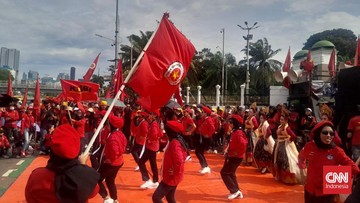
The demands from labor unions, such as the Aliansi Gerakan Buruh Bersama Rakyat, are clear: ojol drivers deserve the rights and protections afforded to formal employees. They argue that the current 'partner' status is a facade that masks exploitation, leaving drivers without adequate social security or job security. This perspective resonates deeply with the drivers themselves, who often face precarious working conditions and unpredictable incomes. The unions' call for the government to recognize platform workers as legitimate employees with equal rights is a significant challenge to the existing business models of ride-hailing companies.
Kami menuntut negara harus mengakui pekerja platform digital sebagai pekerja dengan status yang jelas dan hak yang setara
However, there are signs of progress. The government's strategic acquisition of shares in ride-hailing applications, managed by the Dana Pensiun Badan Usaha Milik Negara (BUMN), signals a potential shift in policy. This move could empower the government to influence operational policies, such as reducing the commission rates charged by platforms. Furthermore, President Prabowo Subianto's announcement regarding Presidential Regulation No. 27 of 2026, which mandates a fairer revenue sharing (at least 92% for drivers) and provides accident insurance, offers a glimmer of hope. From an Indonesian standpoint, these developments are crucial. While Western media might view this through a lens of market disruption, here in Indonesia, it's about ensuring that the millions of individuals powering this essential service are treated with dignity and fairness. The government's intervention, though perhaps slow, aims to balance the interests of innovation with the fundamental rights of workers, a balancing act that is uniquely Indonesian in its context.
Pembagian pendapatan dari (awalnya) 80 persen untuk pengemudi, sekarang menjadi minimal 92 persen untuk pengemudi
DistantNews Editorial
Originally published by Tempo in Indonesian. Translated, summarized, and contextualized by our editorial team with added local perspective. Read our editorial standards.
More Stories


From Our Blog

What Gets Lost (and Found) When News Is Translated

The Critical Role of Diaspora Media in Global News

What Travellers Should Know About Countries with Restricted Press

A Digital Nomad's Guide to Following Local News

How the Same Story Looks Different in Different Countries
