


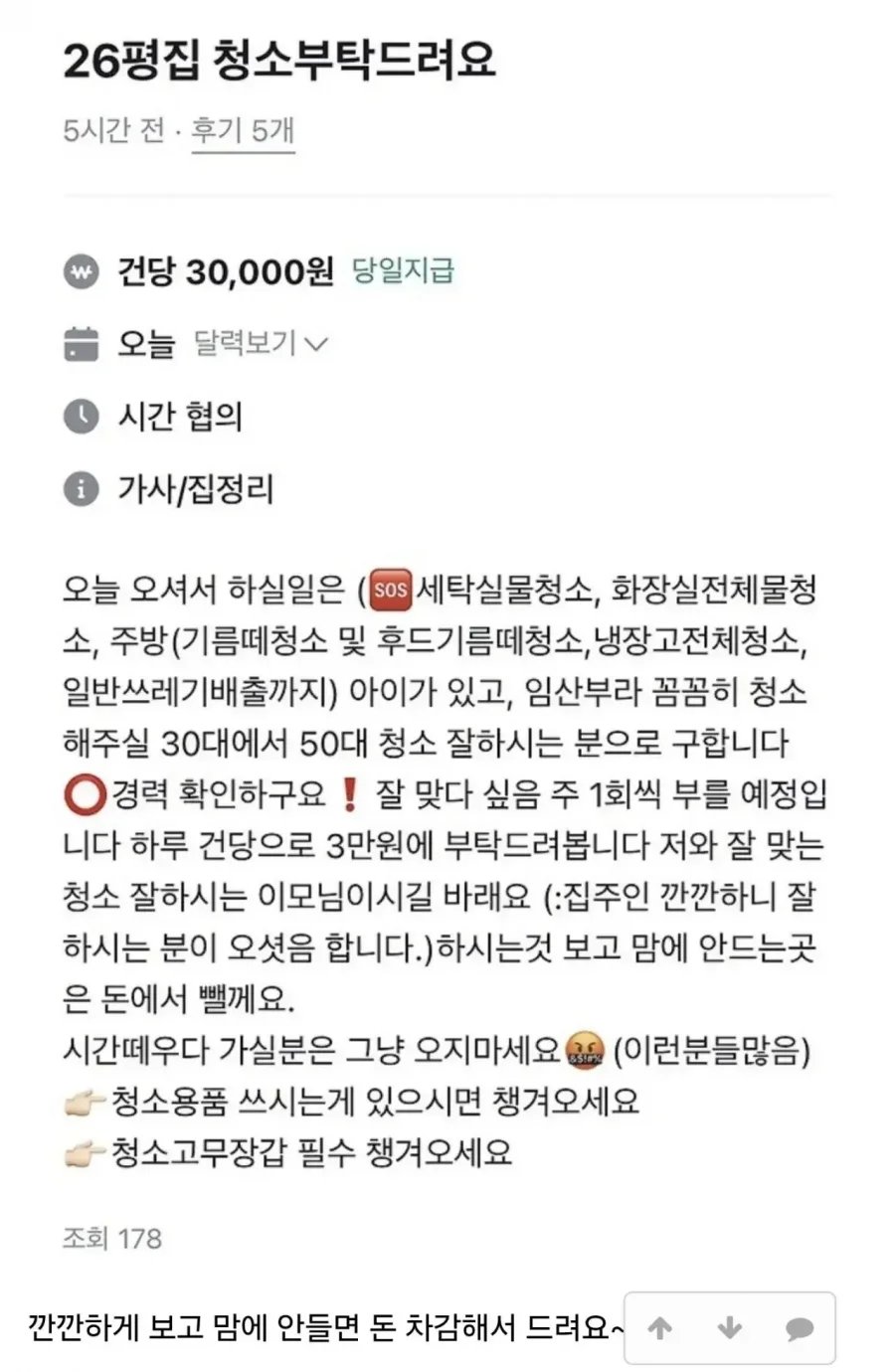
Outcry Over 'Slave Labor' Cleaning Job Ad Offering $22 a Day
Translated from Korean, summarized and contextualized by DistantNews.
TLDR
- A job posting seeking a house cleaner for 30,000 KRW per day has sparked controversy online, with many calling it exploitative.
- The advertisement specified detailed cleaning tasks for a 26-pyeong (approx. 86 sqm) home and included demanding conditions, such as the cleaner bringing their own supplies.
- Critics argue the pay is below minimum wage and that the employer's terms, including potential deductions for dissatisfaction, constitute unfair labor practices, highlighting a broader issue of precarious work in South Korea.
A recent online job advertisement seeking a house cleaner for a mere 30,000 KRW (approximately $22 USD) per day has ignited a firestorm of criticism across South Korean online communities. The post, which appeared on a local job platform, detailed extensive cleaning duties for a 26-pyeong apartment, including tasks like scrubbing bathrooms, degreasing the kitchen, and emptying trash, all for a wage that many deem shockingly low.
Are you looking for a slave to clean your house?
The employer's demands, such as expecting the cleaner to provide their own supplies and threatening to deduct pay for perceived shortcomings, have been widely condemned as exploitative and indicative of "slave labor" recruitment. This incident is not isolated; similar low-paying service job postings have surfaced previously, drawing public ire and highlighting a persistent issue of precarious work arrangements in the country.
The pay is not even minimum wage.
Industry experts note that professional home cleaning services typically charge significantly more, often between 10,000 to 15,000 KRW per pyeong. The advertised rate falls drastically short of this market standard, raising concerns about the desperation of individuals seeking such work and the willingness of some employers to capitalize on it.
Deducting money if they don't like the work is abusive.
Adding another layer to the problem, many individuals working in domestic and cleaning services operate under informal, individual contracts. This often places them outside the protections of the Labor Standards Act, leaving them vulnerable to low wages, long hours, and inadequate rest periods. The ongoing debate underscores the urgent need for better regulation and oversight of the gig economy and informal labor markets in South Korea to ensure fair treatment and prevent the exploitation of workers.
They are taking advantage of people in desperate situations.
DistantNews Editorial
Originally published by Dong-A Ilbo in Korean. Translated, summarized, and contextualized by our editorial team with added local perspective. Read our editorial standards.
More Stories


From Our Blog

What Gets Lost (and Found) When News Is Translated

The Critical Role of Diaspora Media in Global News

What Travellers Should Know About Countries with Restricted Press

A Digital Nomad's Guide to Following Local News

How the Same Story Looks Different in Different Countries
