


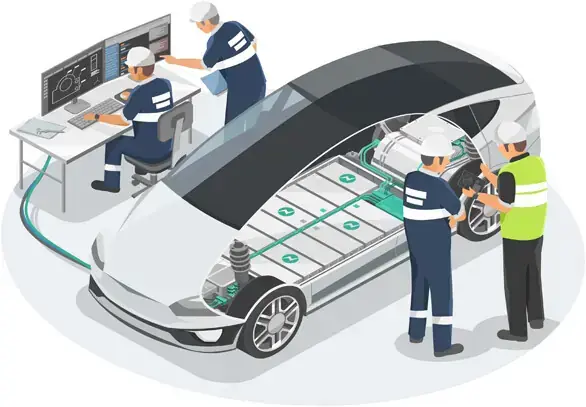
Pakistan Aims to Double Down on Lithium-Ion Battery Production Amidst Import Dependence
Translated from English, summarized and contextualized by DistantNews.
TLDR
- Pakistan's battery ecosystem is underdeveloped, with a heavy reliance on imports for lithium-ion (Li-ion) batteries.
- Wavetec, through its subsidiaries EV Technologies and Atom Power, plans to begin assembling Li-ion battery cells in Karachi within six months.
- The government is pushing for local industrial capacity to meet growing demand from electric mobility and renewable energy sectors.
Pakistan stands at a critical juncture in its energy transition, with the burgeoning demand for lithium-ion (Li-ion) batteries presenting both a challenge and a significant opportunity. The nation's current Li-ion ecosystem is described as 'structurally shallow,' characterized by a low domestic value addition of less than 20 percent and a substantial dependence on imported battery cells and components, particularly for the rapidly growing e-bike and electric vehicle (EV) markets.
However, a promising development is on the horizon. Wavetec, operating through its subsidiaries EV Technologies and Atom Power, is poised to commence the assembly of Li-ion battery cells in Karachi within the next six months. Huma Khattak, CEO of Atom Power and EV Technologies, emphasizes the critical need for a robust battery ecosystem to support sustainable EV adoption, warning, “If we do not localise, we risk replacing our dependence on oil imports with dependence on battery imports.” This initiative signals a crucial step towards reducing import reliance and fostering domestic industrial capability.
EV adoption cannot scale sustainably without a strong battery ecosystem.
The push for localization is further amplified by the government's clear mandate to translate the increasing demand for batteries—driven by electric mobility, solar energy storage, and grid applications—into local manufacturing capacity. Global trends show a significant decline in Li-ion battery costs, making their adoption more viable. Pakistan's projected demand is expected to reach tens of GWh over the next decade, underscoring the urgency of developing a self-sufficient battery sector.
Despite the potential, significant hurdles remain. A notable policy gap and lack of standardization in Pakistan's battery sector pose risks, potentially leading to accidents and eroding consumer trust. The absence of a formal policy for Li-ion batteries, coupled with a lack of robust local testing and certification infrastructure, means that low-quality products could flood the market. Addressing these standardization and safety concerns through accredited local laboratories is paramount for building a sustainable and trustworthy battery industry in Pakistan, moving beyond mere assembly to genuine manufacturing.
If we do not localise, we risk replacing our dependence on oil imports with dependence on battery imports.
DistantNews Editorial
Originally published by Dawn in English. Translated, summarized, and contextualized by our editorial team with added local perspective. Read our editorial standards.
More Stories


From Our Blog

What Gets Lost (and Found) When News Is Translated

The Critical Role of Diaspora Media in Global News

What Travellers Should Know About Countries with Restricted Press

A Digital Nomad's Guide to Following Local News

How the Same Story Looks Different in Different Countries
