

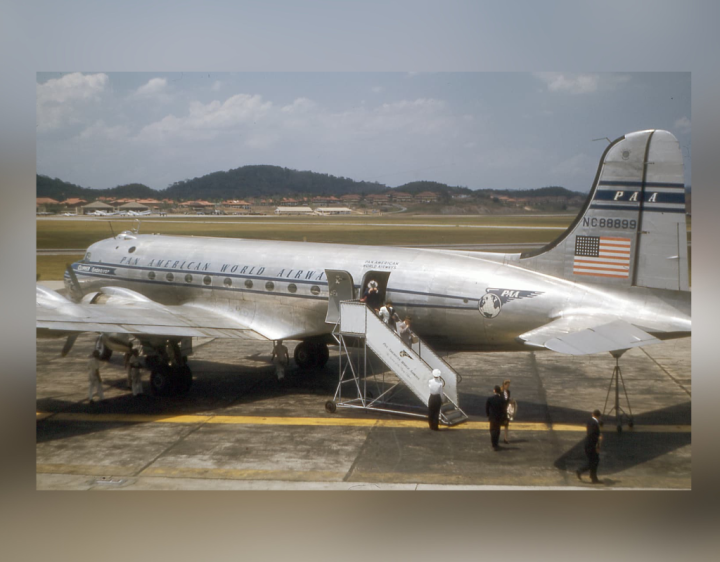
Pan Am Clipper wreckage found more than 70 years after plane crash
Summarized and contextualized by DistantNews.
At a glance
News
Named sources
Outcome reported
- The wreckage of Pan Am Flight 526A, which crashed off Puerto Rico in April 1952, has been discovered more than 70 years later.
- The flight, the Clipper Endeavor, lost both engines shortly after takeoff, resulting in a hard landing on water where 52 of the 69 people on board died when the fuselage sank.
- The accident was a catalyst for significant advancements in aviation safety, including mandatory pre-flight briefings on exits and life vest locations.
The final resting place of Pan Am Flight 526A, the Clipper Endeavor, has been located more than seven decades after its tragic crash off the coast of Puerto Rico. The discovery brings closure to a disaster that profoundly shaped modern commercial aviation safety procedures.
The flight, en route to New York City from San Juan in April 1952, experienced a catastrophic failure less than ten minutes after takeoff, losing both engines. The aircraft, comparable in size to a Boeing 737, executed a hard landing on the Atlantic Ocean. While all 69 passengers and crew initially survived the impact, disaster struck as the fuselage broke apart and sank, leading to the deaths of 52 individuals.
Survivors recounted a harrowing scene of panic as passengers struggled to find life vests and crew members were unable to deploy life rafts. This chaotic aftermath highlighted critical deficiencies in emergency protocols at the time. The incident became a pivotal moment, directly influencing the development of crucial safety measures still in place today.
This one became a catalyst, and it helped drive safety steps forward of better flotation equipment and the preflight briefings.
Aviation safety expert John Cox noted that the accident served as a catalyst, driving forward improvements such as better flotation equipment and mandatory pre-flight safety briefings. He described it as a significant stepping stone toward the aviation safety standards enjoyed by travelers now, calling it a "rallying cry at the time."
The arduous search for the wreckage was spearheaded by Russ Matthews, president of the Air Sea Heritage Foundation. His investigation, sparked by a luggage tag from the flight that washed ashore in Florida in 2019, involved extensive research into airline and Coast Guard archives, ultimately leading explorers to the fuselage resting 2,000 feet below the ocean's surface.
So this is one stepping stone along the path to what we today enjoy as aviation safety. It was a rallying cry at the time.
DistantNews Editorial
Originally published by Global News. Summarized and contextualized by our editorial team with added local perspective. Read our editorial standards.
More Stories

From Our Blog

What Gets Lost (and Found) When News Is Translated

The Critical Role of Diaspora Media in Global News

What Travellers Should Know About Countries with Restricted Press

A Digital Nomad's Guide to Following Local News

How the Same Story Looks Different in Different Countries
