

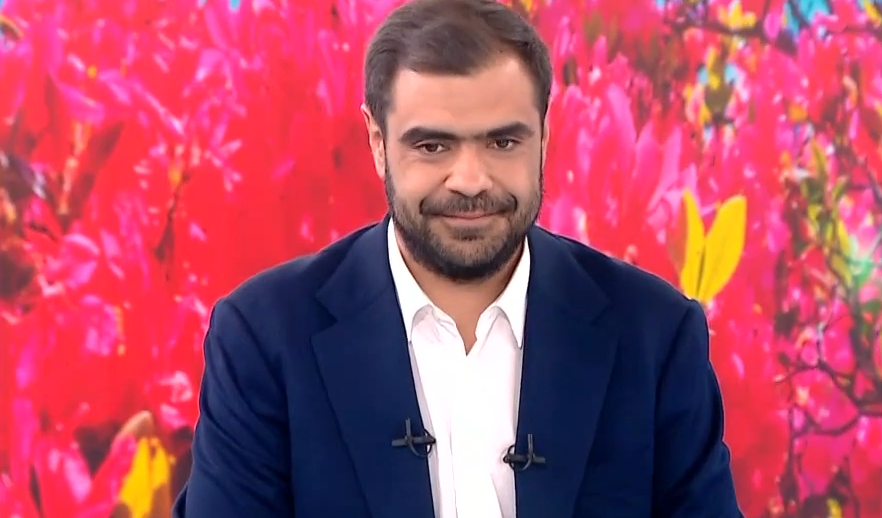
Pavlos Marinakis: 'We Will Give 1 Billion Euros to Citizens in 2027'
Translated from Greek, summarized and contextualized by DistantNews.
TLDR
- Greece's government spokesperson, Pavlos Marinakis, criticized a proposal for a four-day work week.
- He argued the proposal would increase societal problems and business costs, potentially leading to closures or unemployment.
- Marinakis also commented on the political rivalry between Alexis Tsipras and Nikos Androulakis.
As the government spokesperson, Pavlos Marinakis, articulated on MEGA Saturday, the recent proposal for a four-day work week, championed by the opposition, is fundamentally flawed and would exacerbate existing societal and economic challenges. Marinakis, speaking for the Mitsotakis government, emphasized that businesses are already struggling to find sufficient workers. Introducing a shorter work week, he argued, would only intensify this problem, requiring companies to hire more staff to maintain productivity, thereby increasing operational costs.
It is a proposal that is going to increase the problems of society because at this moment businesses need more employees, but they cannot find them, something that will worsen if working days are reduced.
He further elaborated that the increased costs associated with a four-day week could lead to a cascade of negative consequences, including business closures, rising unemployment, or, alternatively, increased prices for consumers, contributing to inflation. Marinakis pointed out the irony that the PASOK party, which proposed this idea, had previously voted against a similar, albeit voluntary, four-day work week legislation introduced by the current government when it was in power. This, he suggested, indicates a lack of consistent policy and a tendency towards populist, unworkable proposals.
Beyond the economic critique, Marinakis also weighed in on the internal political dynamics within the progressive political space. He alluded to an anticipated fierce battle between Alexis Tsipras and Nikos Androulakis, predicting a contest characterized by mudslinging and toxic rhetoric as both vie to be seen as the true representative of the progressive movement. Marinakis contrasted the abstract nature of political manifestos with the tangible results of the current government's policies, implicitly criticizing Tsipras's past economic performance.
The cost is already significant, although we have reduced it, but the cost will increase. So we will have either closures, or unemployment, or if the causes that lead to the first two are absorbed, additional price increases. That is, it is off target and time.
From our vantage point at Ta Nea, this discussion is crucial for understanding the immediate political landscape and the government's strategy in countering opposition narratives. While international coverage might focus on the broader economic implications of a four-day work week, our focus remains on how these proposals impact the Greek economy and the political discourse within Greece. The government's firm stance, as articulated by Marinakis, aims to position itself as the pragmatic choice, prioritizing stability and realistic economic management over what it deems as unrealistic or politically motivated proposals from the opposition. The debate over the work week is not just about labor policy; it's a proxy for a larger ideological battle over the future direction of the country.
It seems like a battle of information and who will offer more, but also who will throw more mud and speak more toxically.
DistantNews Editorial
Originally published by Ta Nea in Greek. Translated, summarized, and contextualized by our editorial team with added local perspective. Read our editorial standards.
More Stories


From Our Blog

What Gets Lost (and Found) When News Is Translated

The Critical Role of Diaspora Media in Global News

What Travellers Should Know About Countries with Restricted Press

A Digital Nomad's Guide to Following Local News

How the Same Story Looks Different in Different Countries
