


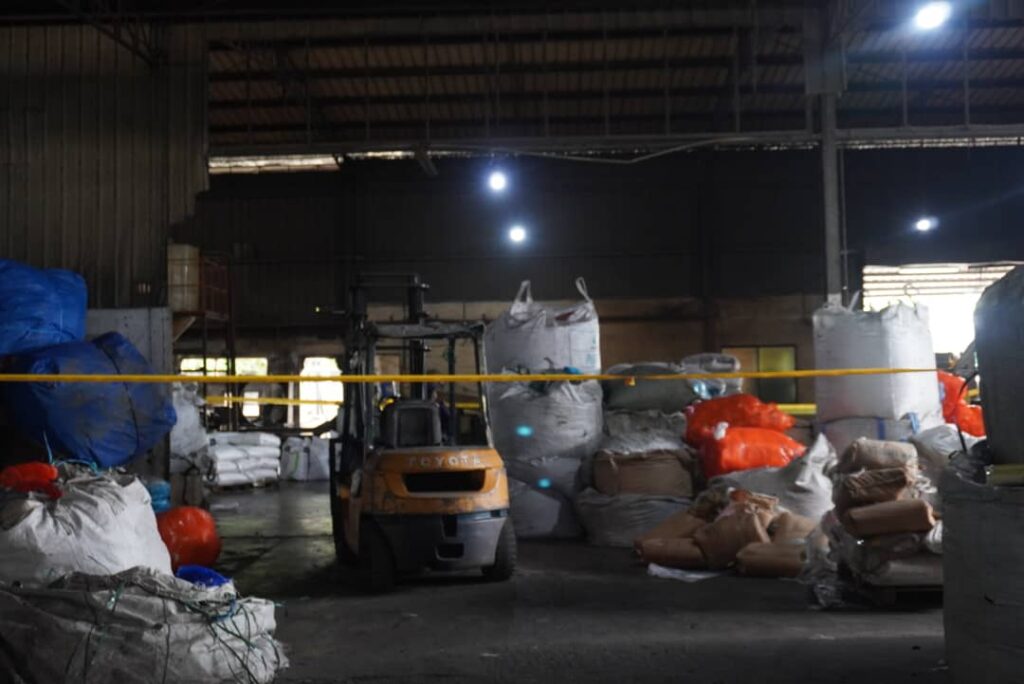
Plastic waste processing plant raided, RM8.6 million in seizures
Translated from Malay, summarized and contextualized by DistantNews.
TLDR
- Police and the Department of Environment raided a plastic waste processing plant in Sungai Petani, believed to have operated without permits since 2021.
- The operation led to the arrest of the 50-year-old male owner and the seizure of 200 tons of unprocessed plastic waste valued at RM8.6 million.
- Authorities are taking action against unlicensed plastic processing activities due to risks to the environment and public safety.
In a significant enforcement action, authorities in Sungai Petani have cracked down on an illegal plastic waste processing plant, highlighting Malaysia's ongoing commitment to environmental protection. The joint operation, involving the police and the Department of Environment (DOE), targeted a facility suspected of operating without proper approvals since 2021. This raid underscores the government's zero-tolerance policy towards unregulated industries that pose a threat to public health and the environment.
The operation, codenamed Op Taring Alpha 5, resulted in the apprehension of the plant's owner, a local man in his 50s. More critically, authorities seized approximately 200 tons of unprocessed plastic waste, along with various processing machinery, with an estimated value of RM8.6 million. This substantial seizure sends a clear message that illegal operations will not be tolerated and that environmental laws will be strictly enforced.
The supply of raw materials for plastic and plastic waste was obtained from industrial areas located in both states.
The seized plastic pellets were reportedly destined for other factories in Kedah and Penang to be manufactured into various products. The raw materials were sourced from industrial areas in both states. This highlights a potential network of illegal processing activities that require continuous monitoring and intervention by enforcement agencies. The DOE is now investigating the case under the Environmental Quality Act 1974, which carries severe penalties for offenders.
This crackdown is part of a broader national effort to combat environmental pollution, particularly from the plastic industry. The government recognizes the serious risks associated with unlicensed processing, including air and water contamination, and potential health hazards. By taking decisive action, Malaysia aims to safeguard its natural resources and ensure a sustainable future for its citizens, demonstrating a firm resolve to uphold environmental standards and public well-being.
Enforcement actions will be taken against any party that carries out plastic processing activities without a valid permit because it can pose serious risks to the environment and public safety.
DistantNews Editorial
Originally published by Utusan Malaysia in Malay. Translated, summarized, and contextualized by our editorial team with added local perspective. Read our editorial standards.
More Stories


From Our Blog

What Gets Lost (and Found) When News Is Translated

The Critical Role of Diaspora Media in Global News

What Travellers Should Know About Countries with Restricted Press

A Digital Nomad's Guide to Following Local News

How the Same Story Looks Different in Different Countries
