


Poland Boosts Defense Industry Through Domestic Production and International Partnerships
Translated from Polish, summarized and contextualized by DistantNews.
At a glance
In-depth
Named sources
New plan
- Poland's defense industry is shifting from importing finished equipment to domestic production, including new factories, service centers, and technology transfer.
- The International Defense Industry Exhibition (MSPO) in Kielce is a key venue for these new partnerships, facilitating deals for production, investment, and technology cooperation.
- Companies like MESKO are significantly increasing production of anti-aircraft systems and ammunition, while international firms like Rheinmetall are exploring Polish production facilities for components and vehicles.
Poland's defense sector is undergoing a significant transformation, moving away from relying solely on imported military equipment towards strengthening domestic production capabilities. This strategic shift involves substantial investments in new manufacturing plants, service centers, and fostering joint ventures with international partners, alongside technology transfers.
The International Defense Industry Exhibition (MSPO) in Kielce serves as a crucial platform for this evolving landscape. Scheduled from September 8-11, the event will host nearly 1,000 companies from 35 countries. MSPO has evolved beyond a mere exhibition of military hardware, increasingly functioning as a space where global arms manufacturers, Polish enterprises, research institutes, and government bodies converge to forge new collaborations.
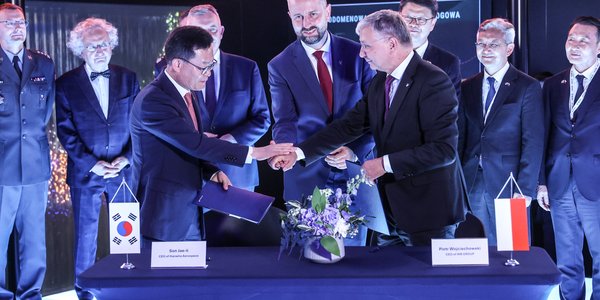
Last year's MSPO saw the signing of 43 agreements, covering production projects, investment financing, and technological cooperation. Notable among these were an agreement between WB Group and Hanwha Aerospace to establish a joint venture for producing ammunition for the Homar-K system, and a deal between Polska Grupa Zbrojeniowa and PKO Bank Polski to secure financing for investments totaling 12 billion Polish zloty.
MSPO od dawna wykracza poza rolę klasycznej wystawy sprzętu wojskowego. To przestrzeń, w której spotykają się światowi producenci uzbrojenia, polskie przedsiębiorstwa, instytuty badawcze i administracja odpowiedzialna za rozwój przemysłu
Companies like MESKO exemplify this industrial growth. MESKO is undertaking its largest investment program to date, doubling its production of PIORUN anti-aircraft missile sets and developing the PIORUN 2 system. The company is also expanding its production of small and medium-caliber ammunition, increasing capacity from 50 million to 250 million units annually, and investing in a new factory for 155mm artillery ammunition components.
International players are also engaging with Poland's growing defense industry. Rheinmetall is in discussions to establish production of 155mm modular propellant charges in Poland, and Wielkopolskie Zakłady Pancerne is being established in Poznan to produce and service Abrams, Leopard, and other armored vehicles. This trend signifies Poland's transition from a primary consumer of armaments to a significant producer and service provider.
Polska stopniowo przestaje być wyłącznie odbiorcą uzbrojenia, a coraz częściej staje się miejscem jego produkcji i obsługi. Większego znaczenia nabierają również technologie podwójnego zastosowania oraz rozwój zaplecza serwisowego. To kierunek, który wzmacnia
DistantNews Editorial
Originally published by Rzeczpospolita in Polish. Translated, summarized, and contextualized by our editorial team with added local perspective. Read our editorial standards.
More Stories



From Our Blog

What Gets Lost (and Found) When News Is Translated

The Critical Role of Diaspora Media in Global News

What Travellers Should Know About Countries with Restricted Press

A Digital Nomad's Guide to Following Local News

How the Same Story Looks Different in Different Countries
