

Poland's Constitution: A Strength in Compromise, Not Speed?
Translated from Polish, summarized and contextualized by DistantNews.
TLDR
- The current Polish constitution, despite enabling EU and NATO membership and economic growth, faces widespread calls for change, particularly regarding the division of powers between the Prime Minister and President.
- Critics argue that a "two-headed executive" creates significant problems and hinders effective governance, advocating for a clear presidential or parliamentary system.
- The author suggests that the constitution's strength lies in its necessity for negotiation and compromise between executive centers, arguing that this deliberate process, though slower, ensures safer and more considered decisions than rapid, unilateral actions.
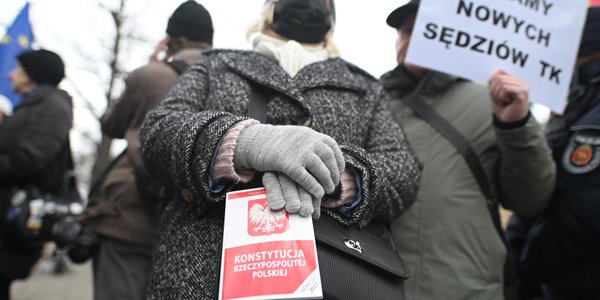
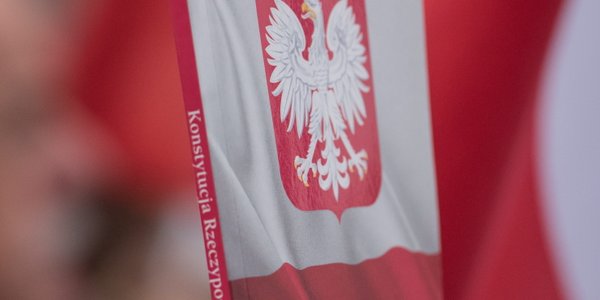
Warsaw — The constitution currently in effect in Poland is facing a significant wave of criticism, with a near-universal consensus emerging that it requires amendment. This is somewhat paradoxical, considering that under its governance, Poland has successfully joined both NATO and the European Union, witnessed a rise in living standards approaching the EU average, and ascended to become the world's twentieth-largest economy. These achievements represent a substantial legacy for the existing constitutional framework.
If someone asks me why politics in Poland doesn't look like it does in Norway or Switzerland, I answer that it's because Poles live in Poland, not Norwegians or Swiss.
The primary point of contention for those advocating for change, particularly within political circles, centers on the perceived ambiguity in the division of competencies between the Prime Minister and the President. This "two-headed executive," as critics often describe it, is frequently cited as a major impediment to decisive governance, leading to calls for a definitive resolution—either a purely presidential or a parliamentary (chancellorship) system.
However, Professor Marek Migalski, in his analysis, posits that what many view as a flaw might actually be the constitution's most significant advantage. He argues that the inherent necessity for negotiation and compromise between the "large palace" (Presidency) and the "small palace" (Prime Minister's office) serves as a crucial safeguard. This mandatory dialogue, he contends, allows for the correction of potential errors and ensures that state affairs are handled with deliberation rather than haste.
Proponents of clear indication in the new constitution of the entity that has almost all executive power are like mechanics tuning up a car engine and – at the same time – removing seatbelts, airbags, traction control systems, ABS, and other passenger protection mechanisms.
Migalski draws an analogy, comparing proponents of a swift, singular executive power to mechanics who enhance an engine's speed while removing safety features like seatbelts and airbags. He questions whether Poland truly desires a system where decisions are made rapidly by one dominant executive center, potentially at the expense of safety and thorough consideration. He emphasizes that citizen welfare is not solely dependent on the constitutional model—presidential, semi-presidential, or parliamentary systems have all proven successful elsewhere—but rather on factors that transcend the specific structure of the basic law.
Citizen welfare depends to a small extent on the system of government in a given country.
DistantNews Editorial
Originally published by Rzeczpospolita in Polish. Translated, summarized, and contextualized by our editorial team with added local perspective. Read our editorial standards.
More Stories
From Our Blog

What Gets Lost (and Found) When News Is Translated

The Critical Role of Diaspora Media in Global News

What Travellers Should Know About Countries with Restricted Press

A Digital Nomad's Guide to Following Local News

How the Same Story Looks Different in Different Countries
