


Polish Insurance Sector Adapts to New Era of Risk and Resilience
Translated from Polish, summarized and contextualized by DistantNews.
TLDR
- The role of insurance in the Polish economy is shifting towards enhancing business resilience amid geopolitical, climate, and demographic challenges.
- Insurers are adapting by leveraging data, modeling, and technology to better assess risks and support clients in managing them, moving from simply providing policies to offering risk management solutions.
- Despite advancements, the Polish insurance market still faces limitations, with current offerings deemed insufficient for catastrophic or systemic risks, and many businesses still viewing insurance primarily as a cost rather than a strategic tool.
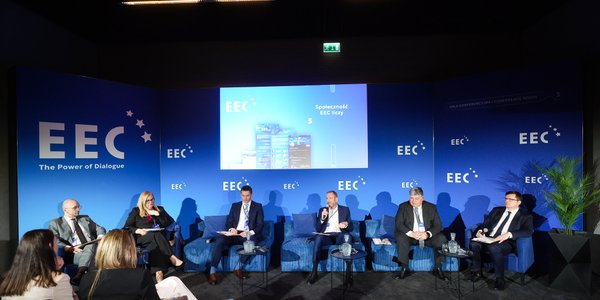
A recent debate at the European Economic Congress in Katowice, as reported by Rzeczpospolita, underscored a significant evolution in the insurance sector's role within the Polish economy. The conversation centered not just on traditional coverage, but on how insurance is becoming a cornerstone of corporate resilience in the face of unprecedented global shifts. Geopolitics, climate change, and demographic trends are no longer abstract concerns but tangible risks that businesses must navigate, and insurers are increasingly seen as crucial partners in this endeavor.
We are not so much predicting the future, but we are better prepared for what might happen. Building resilience starts precisely with insurance.
Marcin Ogniewski, Director of Corporate Business Development at PZU SA, highlighted the industry's adaptation. He noted that while competition and premium rates may be under pressure, the complexity of risks is escalating. The focus, he explained, is shifting from merely predicting the future to being better prepared for potential events. Insurance is now framed as the starting point for building resilience, with advancements in data analytics, modeling, and technology enabling insurers to offer more precise risk assessments and proactive client support.
The insurance market does not like change. And now, order is just a break between changes.
However, the Polish market is not without its challenges. Jan Grzegorz Prądzyński, President of the Polish Chamber of Insurance, pointed out that the insurance market thrives on stability, a commodity in short supply amidst current global volatility. Professor Monika Szaraniec from the University of Economics in Krakow added that existing insurance products are systemically insufficient to cover catastrophic or systemic risks. This suggests a gap between the evolving needs of businesses and the current capabilities of the market. The prevailing attitude among many Polish entrepreneurs still views insurance as a necessary expense rather than a strategic investment, a mindset that needs to change as businesses increasingly rely on insurers not just for financial compensation, but for expert guidance in risk management and prevention.
The business would like insurance to be the full stop at the end of the sentence, and not a fight over the scope and acquisition of that protection.
DistantNews Editorial
Originally published by Rzeczpospolita in Polish. Translated, summarized, and contextualized by our editorial team with added local perspective. Read our editorial standards.
More Stories


From Our Blog

What Gets Lost (and Found) When News Is Translated

The Critical Role of Diaspora Media in Global News

What Travellers Should Know About Countries with Restricted Press

A Digital Nomad's Guide to Following Local News

How the Same Story Looks Different in Different Countries
