


Relief Bonus Blocked: Leaders Advise Tax Reform Instead
Translated from German, summarized and contextualized by DistantNews.
TLDR
- The proposed relief bonus for employees, allowing employers to pay up to 1,000 euros tax-free, has been blocked by the Bundesrat (Federal Council).
- Bavarian Minister-President Markus Söder and Mecklenburg-Vorpommern's Minister-President Manuela Schwesig advised against pursuing the bonus, citing resistance from the business community.
- Both politicians suggested focusing on a comprehensive income tax reform instead, which would provide lasting relief for small and medium incomes.
The much-discussed relief bonus for employees appears to be dead in the water after the Bundesrat blocked the proposal. This decision significantly dims the prospects of employers being able to voluntarily pay their staff up to 1,000 euros tax-free by June 30, 2027. The plan, which would have allowed employers to deduct these payments as business expenses, thereby involving the state in subsidizing the bonus, failed to gain sufficient support from the federal states.
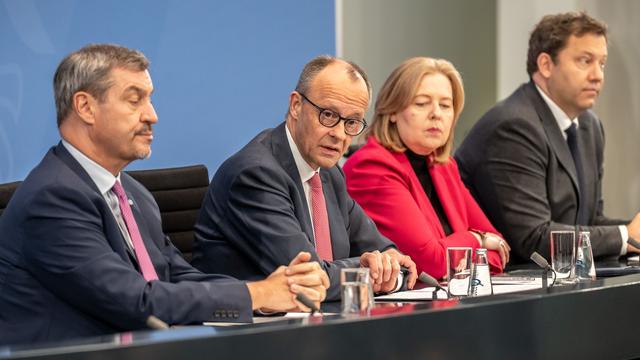
Prominent political figures are now urging the federal government to abandon the relief bonus idea. Markus Söder, the Minister-President of Bavaria and CSU leader, stated that the bonus is "off the table." He described it as a "well-intentioned idea" that encountered significant opposition from the business sector. Söder noted that the tax revenue loss would have been too substantial for most states to agree to the counter-financing arrangements, advising strongly against its continuation.
Ich glaube, die ist vom Tisch.
Echoing this sentiment, Manuela Schwesig, the Minister-President of Mecklenburg-Vorpommern (SPD), also recommended that the federal government drop the proposal. She advocated for a more substantial approach, suggesting that the government should instead focus on implementing a comprehensive income tax reform. Schwesig argued that such a reform would offer permanent relief, particularly benefiting small and medium-sized incomes up to 3,000 euros, and would be a more effective way to provide lasting support.
The debate highlights a divergence in approaches to economic relief. While the relief bonus was intended as a swift, albeit voluntary, measure, the push for a broader income tax reform suggests a desire for more structural and enduring solutions. The coalition parties had agreed in their contract to lower income taxes for small and medium earners by mid-term, with a reform planned for January 1, 2027, though specific details are still pending. The political discussions now seem to be shifting towards accelerating and defining these larger fiscal adjustments.
Also ich rate der Bundesregierung, das vom Tisch zu nehmen und lieber gleich den richtigen großen Wurf zu machen.
DistantNews Editorial
Originally published by Die Zeit in German. Translated, summarized, and contextualized by our editorial team with added local perspective. Read our editorial standards.
More Stories



From Our Blog

What Gets Lost (and Found) When News Is Translated

How the Same Story Looks Different in Different Countries

The Critical Role of Diaspora Media in Global News

What Travellers Should Know About Countries with Restricted Press

A Digital Nomad's Guide to Following Local News
