

Romania's reaction to CIA chief's Moscow visit: 'War is not going as the Kremlin anticipated'
Translated from Romanian, summarized and contextualized by DistantNews.
At a glance
News
Named sources
Context piece
- Romania views the CIA chief's visit to Moscow as a positive sign for dialogue on strategic stability and security.
- A Romanian state counselor believes the talks signal important communication channels remain open between the US and Russia.
- The current context of the war in Ukraine and Russia's economic fragilities may prompt Moscow to explore various conflict scenarios.
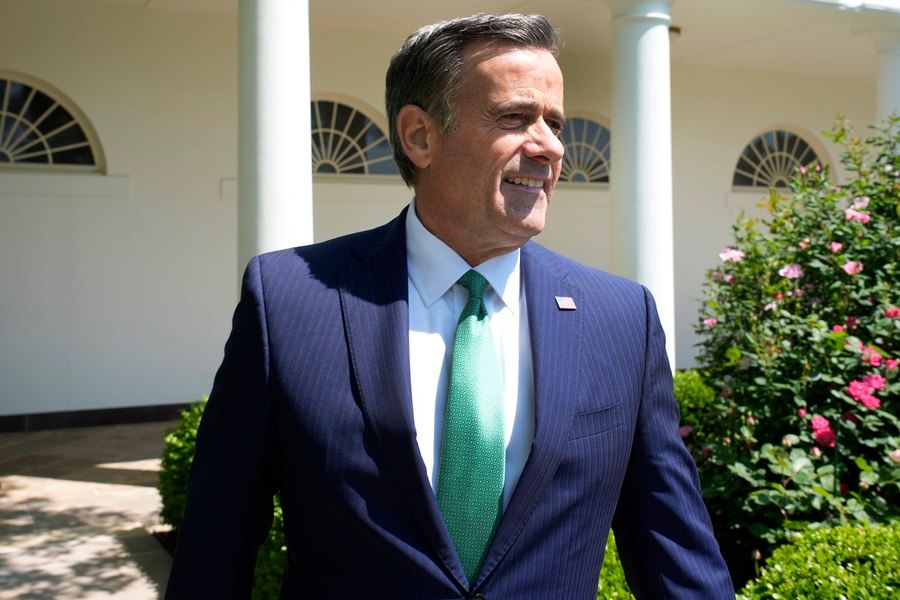
Romania views the recent visit of CIA Director John Ratcliffe to Moscow as a potentially significant development, fueling speculation about direct U.S.-Russia contacts on security and strategic stability. State Counselor Vlad Ionescu emphasized that maintaining dialogue between the two global powers sends an important signal to NATO allies, particularly those on the eastern flank.
In an interview with TVR, Ionescu stated that the meeting between U.S. and Russian representatives can be interpreted as a continuation of discussions on regional and global security, even though the specifics of the conversations remain undisclosed. "The positive aspect for us, as an alliance and as an eastern flank, is that there is a dialogue between the U.S. and Russia on issues of strategic stability and security. We don't know much about the content of these conversations. We've mostly seen reports in the press, so it's difficult to infer what was discussed," he said.
Ionescu suggested that the ongoing war in Ukraine and the difficulties Russia is reportedly facing militarily and economically could be influencing Moscow's approach to the conflict. "We can speculate that, certainly, Russia is not in a good situation regarding the dynamics of the war, nor economically; we see economic fragilities in the Russian economy, so to speak. The war is not going as the Kremlin leadership anticipated, and in this context, it is possible that Russia is exploring various scenarios, various options – mobilization, a large-scale mobilization that would cause this conflict, which has already lasted longer than World War I, to develop even further, with again negative implications for the economies, for the security of Europe and globally," Ionescu explained.
The Romanian official believes that U.S.-Russia dialogue could also play a role in preventing uncontrolled escalation of the conflict and potentially paving the way for a future resolution. The emphasis remains on the importance of open communication channels, even amidst geopolitical tensions.
Putem specula că, sigur, Rusia nu se află într-o situație bună din punct de vedere a dinamicii războiului, nici economic, adică și economic vedem fragilități în economia rusă, ca să spun așa. Războiul nu merge cum anticipase conducerea de la Kremlin și, în acest context, e posibil ca Rusia să exploreze diverse scenarii, diverse opțiuni - mobilizarea, o mobilizare de amploare care ar face ca acest conflict, care deja a durat mai mult decât Primul Război Mondial, să se dezvolte și mai mult, cu implicații din nou negative asupra economiilor, asupra securității Europei și global
DistantNews Editorial
Originally published by Adevărul in Romanian. Translated, summarized, and contextualized by our editorial team with added local perspective. Read our editorial standards.
More Stories
From Our Blog

What Gets Lost (and Found) When News Is Translated

The Critical Role of Diaspora Media in Global News

What Travellers Should Know About Countries with Restricted Press

A Digital Nomad's Guide to Following Local News

How the Same Story Looks Different in Different Countries
