


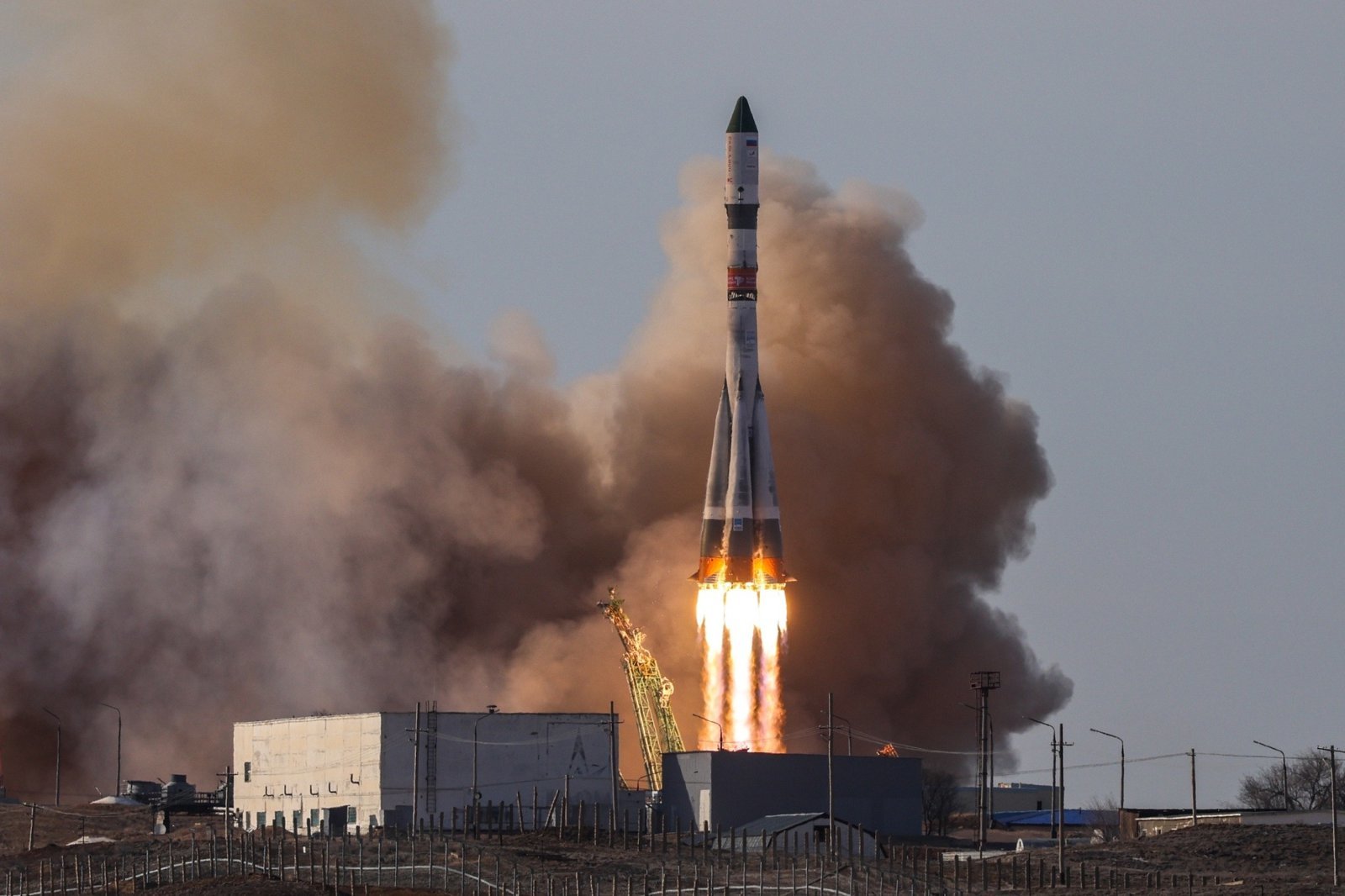
Russia Successfully Launches Next-Generation 'Soyuz-5' Rocket, Expecting Lower Costs for Low-Orbit Transport
Translated from Korean, summarized and contextualized by DistantNews.
TLDR
- Russia successfully conducted the first test launch of its next-generation Soyuz-5 medium-lift launch vehicle.
- The rocket carried a dummy payload into a suborbital flight, with both stages functioning correctly.
- The Soyuz-5 is expected to significantly reduce transportation costs to low Earth orbit due to its high precision and capacity.
Russia has taken a significant step forward in its space exploration capabilities with the successful inaugural test launch of its new Soyuz-5 medium-lift rocket. As reported by Dong-A Ilbo, citing Xinhua and Sputnik, the launch from the Baikonur Cosmodrome in Kazakhstan marks a crucial development for Roscosmos, the Russian state space corporation. This test is part of a broader strategy to modernize Russia's launch vehicle fleet and enhance its competitiveness in the global space market.
The Soyuz-5 rocket is designed to carry substantial payloads, up to 17 tons, to low Earth orbit with high precision. This capability is expected to lead to a considerable reduction in the cost per kilogram for launching satellites and other payloads. In an era where space commercialization is rapidly expanding, cost-efficiency is a critical factor, and the Soyuz-5 aims to position Russia favorably in this evolving landscape.
Developed by the Progress Rocket Space Center in Samara, the Soyuz-5 features a two-stage design and utilizes environmentally friendlier propellants. Its advanced liquid engines are noted for their high performance, contributing to its precise orbital insertion capabilities. The successful suborbital test flight, where the rocket's stages performed as expected and the dummy payload landed in a designated area of the Pacific Ocean, validates the design and engineering behind this new vehicle.
While the initial launch was scheduled for late 2025, the delay allowed for additional testing of onboard systems and ground equipment, ensuring a more robust first flight. This successful test is seen as a pivotal moment, enabling Russia to accelerate its development of next-generation space launch vehicles and bolster its economic competitiveness in space-related industries. The successful deployment of the Soyuz-5 is a clear signal of Russia's continued commitment to maintaining a strong presence in space.
DistantNews Editorial
Originally published by Dong-A Ilbo in Korean. Translated, summarized, and contextualized by our editorial team with added local perspective. Read our editorial standards.
More Stories



From Our Blog

What Gets Lost (and Found) When News Is Translated

The Critical Role of Diaspora Media in Global News

What Travellers Should Know About Countries with Restricted Press

A Digital Nomad's Guide to Following Local News

How the Same Story Looks Different in Different Countries
