


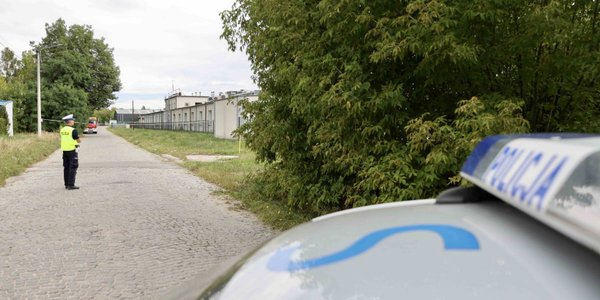
Russian Sabotage in Germany and Poland Seeks to Convince People They Are to Blame Themselves
Translated from Polish and summarized by DistantNews. Read the original for the full story.
At a glance
Analysis
Named sources
Under investigation
- An intentional incident at a power station near Cologne disconnected five RWE units with combined capacity of 4,200 megawatts, but customers kept their electricity.
- A separate attack disabled a unit at Jänschwalde, where investigators found improvised explosive and incendiary devices and damaged an overhead line.
- German authorities are investigating extremist groups and foreign actors as possible perpetrators amid hundreds of reported critical-infrastructure sabotage cases.
Two attacks on German coal-fired power infrastructure have intensified suspicions that the country’s energy networks are being tested for vulnerabilities. At a substation in Bergheim, near Cologne, unknown perpetrators caused a short circuit that disconnected five RWE power units in North Rhine-Westphalia. The plant’s combined capacity is 4,200 megawatts, about 10 percent of Germany’s electricity demand.
The units are being restarted gradually, and consumers did not lose power. Police said they believe the incident was deliberate. “Based on the current state of the investigation, we do not assume a technical fault, but rather a crime,” a police spokesman in Essen said.
Based on the current state of the investigation, we do not assume a technical fault, but rather a crime.
The previous day, Unit B at the Jänschwalde coal plant in southern Brandenburg was shut down. Investigators found dozens of improvised explosive and incendiary devices near the Turnow-Preilack transformer station. Some failed to detonate. Two attacks succeeded, damaging an overhead line and causing a short-lived outage. Alternative connections and renewable sources kept customers supplied.
The perpetrators in both cases remain unidentified. Police are considering extremist groups and the possible involvement of foreign actors, but investigators have not found evidence pointing to a specific culprit. Analysts say the incidents resembled each other and required technical preparation, which is why German services are treating them seriously.
turning off the power to those in government
The article places the attacks within a longer series of deliberate assaults on German energy networks. Germany’s Federal Criminal Police Office recorded 321 cases of sabotage against critical infrastructure in 2025, including the energy sector. Most perpetrators were not identified. Many incidents have been attributed to left-wing organizations, which typically damage or burn key cable connections.
One January attack in Berlin cut power to 50,000 households, businesses and public institutions during several freezing days. The anarchist extremist group Vulkangruppe claimed responsibility, citing a goal of “turning off the power to those in government” and attacking “the fossil-fuel-based industry.” Language errors in its manifesto, however, raised the possibility of a Russian connection. The group has been linked to arson and critical-infrastructure sabotage in Berlin and Brandenburg for more than a decade and has claimed 11 such actions since 2011.
the fossil-fuel-based industry
About this summary
Originally published by Rzeczpospolita in Polish. Translated, summarized, and contextualized automatically by DistantNews, with a note on how the source frames the story. Not individually reviewed before publishing. How this works.
More Stories
From Our Blog

What Gets Lost (and Found) When News Is Translated

The Critical Role of Diaspora Media in Global News

What Travellers Should Know About Countries with Restricted Press

A Digital Nomad's Guide to Following Local News

How the Same Story Looks Different in Different Countries
