


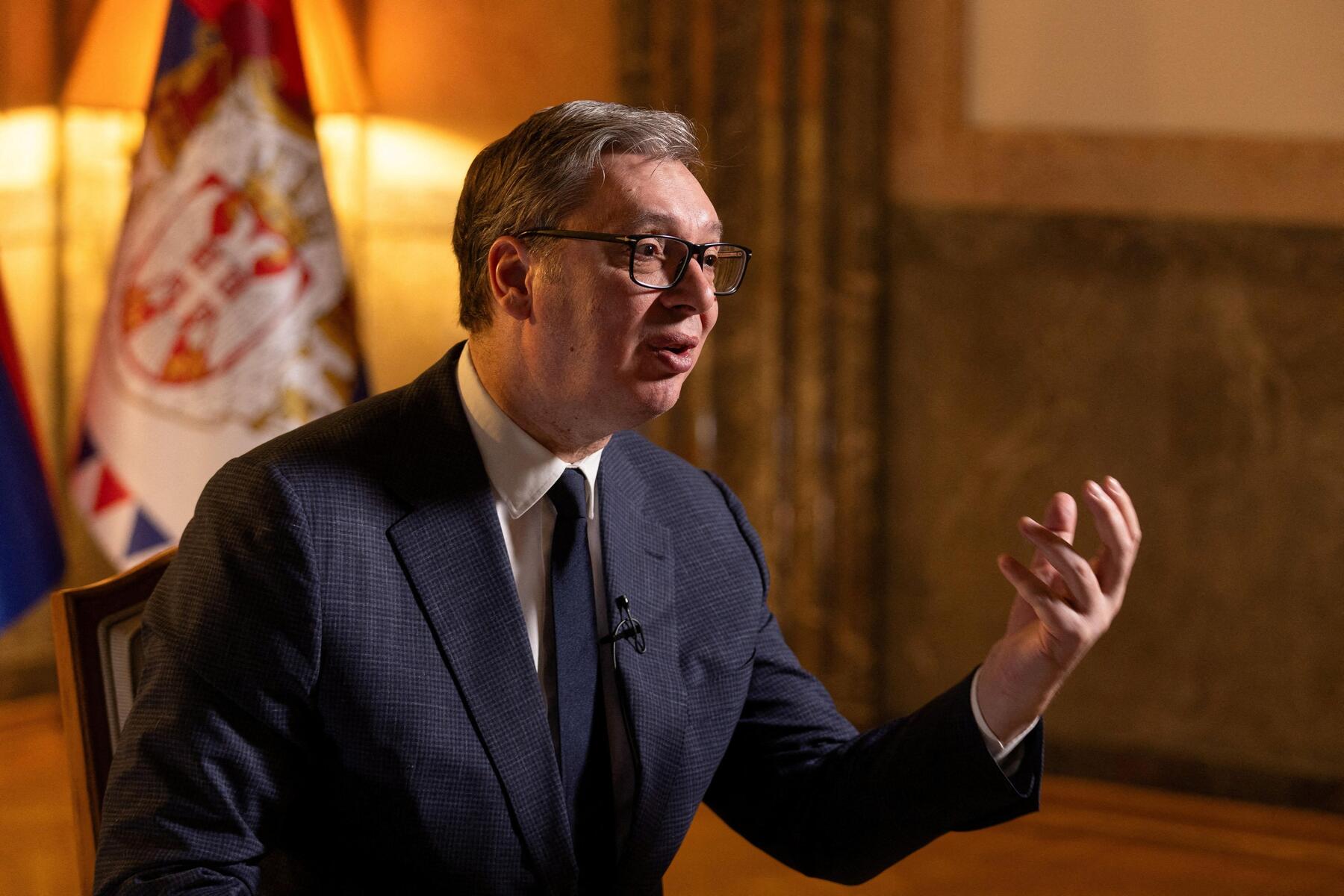
Serbia's Vučić Considers Summer Elections Amidst Power Consolidation Efforts
Translated from German, summarized and contextualized by DistantNews.
TLDR
- Serbian President Aleksandar Vučić is reportedly considering holding snap elections during the summer holiday period.
- The move is seen as a strategy to potentially lower voter turnout, benefiting the ruling party which relies on a base of "forced regular voters."
- This potential election timing comes amid falling approval ratings for Vučić's SNS party and his own desire to transition from president to prime minister.
From the perspective of Die Presse, an Austrian newspaper known for its in-depth political analysis and critical stance, the maneuvering around potential snap elections in Serbia, particularly President Aleksandar Vučić's contemplation of a summer date, warrants close scrutiny. The article frames this not merely as a scheduling decision but as a calculated political gamble aimed at consolidating power.
In diversen Balkanstaaten versuchen Regierungen seit jeher mit den verschiedensten Mitteln an der Macht zu bleiben: Von Stimmenkauf und Wählererpressung über manipulierte Wählerverzeichnisse und Wanderwähler bis hin zu angeheuerten Auftragsschlägern zur Wählereinschüchterung oder mit vorab ausgefüllten Wahlzetteln aufgefüllte Urnen reicht das Trickarsenal gewiefter Wahlfälscher.
The core of the speculation, as reported, is that Vučić and his ruling Serbian Progressive Party (SNS) might opt for an election during the peak summer vacation season. Die Presse highlights the strategic rationale behind this: a lower voter turnout could disproportionately benefit the ruling party, which allegedly relies on a significant bloc of state employees and other "forced regular voters" whose participation is more predictable. In contrast, a higher turnout, potentially driven by engaged opposition supporters, could dilute the impact of these secured votes.
Doch auch die Terminisierung eines Urnengangs kann wahlentscheidend sein. Serbiens Machthaber denken beispielsweise nun an einen Wahltermin mitten in den Sommerferien. Der Grund: Ihnen ist an einer möglichst niedrigen Wahlbeteiligung gelegen.
This consideration of a summer election is placed within a broader context of Vučić's political ambitions and recent electoral setbacks. The article notes his impending end of a second and final presidential term, fueling speculation about his desire to move into the prime minister's role. Furthermore, the SNS's recent losses in local elections across ten provincial towns suggest a weakening grip on power, making a strategic election timing even more critical for the party's leadership.
„Blitzkrieg oder Bluff der Machthaber“, fragt sich das Wochenmagazin „NIN“. Tatsächlich ist unklar, ob Vučić angesichts fallender Umfragewerte seine Landsleute wirklich zum Ärger aller im Juli an die Urnen beordern will; ob er insgeheim doch auf bessere Umfragezeiten im Herbst hofft; ob er seine Gegner zur Preisgabe ihrer Strategien provozieren oder ob er mit dem Anheizen der Spekulationen über eine Juli-Wahl nur von anderen Themen ablenken will.
Die Presse questions the efficacy and potential backlash of such a move. While a summer election might suppress opposition turnout, it could also alienate traditional government supporters who may have made non-refundable holiday plans. The article references the Serbian weekly magazine NIN's question: "Blitzkrieg or bluff of the rulers?" This captures the uncertainty surrounding Vučić's true intentions. Is he genuinely planning a summer election, hoping for better poll numbers in the fall, attempting to provoke his opponents, or merely diverting attention from other issues? Die Presse emphasizes that in Serbia, unlike in more predictable democracies, election announcements can resemble "secret operations," leaving observers and citizens alike guessing the true motives behind the political machitions.
In normalen Staaten sei eine gewisse Vorhersehbarkeit für alle Akteure üblich, in Serbien würden Wahlen wie eine „Geheimoperation“ ausgeschrieben
DistantNews Editorial
Originally published by Die Presse in German. Translated, summarized, and contextualized by our editorial team with added local perspective. Read our editorial standards.
More Stories


From Our Blog

What Gets Lost (and Found) When News Is Translated

The Critical Role of Diaspora Media in Global News

What Travellers Should Know About Countries with Restricted Press

A Digital Nomad's Guide to Following Local News

How the Same Story Looks Different in Different Countries
