


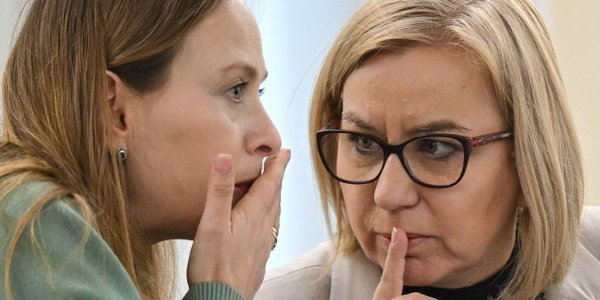
Should Paulina Hennig-Kloska go to Canossa? Politics, not substance, drives the conflict.
Translated from Polish, summarized and contextualized by DistantNews.
TLDR
- A political analyst questions whether Paulina Hennig-Kloska, a minister, should have appeared before a tribunal of her former party members.
- The author argues that the summons was a political maneuver, not a substantive issue, and criticizes the internal divisions within the Poland 2050 party.
- The piece speculates on Prime Minister Donald Tusk's potential reaction to any dissent within the ruling coalition.
The political maneuvering surrounding Minister Paulina Hennig-Kloska's summons by her former party, Poland 2050, reveals a troubling trend in Polish politics. As reported by Rzeczpospolita, this situation is less about policy and more about political retribution, a calculated move by Szymon Hołownia's faction to humiliate Hennig-Kloska following her departure.
The author expresses deep disappointment, particularly noting how a party that promised a "new quality" in politics has fractured so quickly. The criticism is directed at the leadership, especially Minister Katarzyna Pełczyńska-Nałęcz, for failing to maintain party unity after winning internal elections. The piece suggests that prioritizing unity and reconciliation would have been a more strategic path, potentially leading to greater influence within the coalition, rather than allowing a split that weakens their position.
From Rzeczpospolita's perspective, the focus remains on the pragmatic implications for the coalition government. The article warns against public confrontations with Prime Minister Donald Tusk, highlighting his reputation for decisive leadership. Any attempt at rebellion by Poland 2050 members is likely to be met with a firm response, potentially leading to their absorption into Tusk's Civic Coalition (KO) or allied clubs, demonstrating that unity, even if enforced, is paramount for the current government's stability.
This internal party drama, while seemingly a domestic Polish issue, speaks to broader themes of political ambition, loyalty, and the challenges of maintaining cohesion in a fragmented political landscape. The article underscores how personal and party rivalries can overshadow substantive governance, a point of particular concern for a publication like Rzeczpospolita, which often emphasizes stability and effective administration.
DistantNews Editorial
Originally published by Rzeczpospolita in Polish. Translated, summarized, and contextualized by our editorial team with added local perspective. Read our editorial standards.
More Stories


From Our Blog

What Gets Lost (and Found) When News Is Translated

The Critical Role of Diaspora Media in Global News

What Travellers Should Know About Countries with Restricted Press

A Digital Nomad's Guide to Following Local News

How the Same Story Looks Different in Different Countries
