


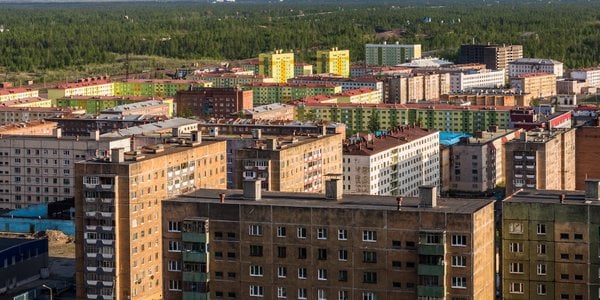
Siberia sizzles as Arctic records highest July temperatures in decades
Translated from Polish, summarized and contextualized by DistantNews.
At a glance
News
Sources not specified
Context piece
- Arctic regions experienced record-breaking heat in July 2026, with temperatures exceeding averages across vast areas.
- Siberia, particularly the Lena River valley and Krasnoyarsk Krai, saw temperatures surpass 35 degrees Celsius, marking the warmest July since 1969 in some locations.
- This warming trend aligns with broader Arctic amplification, where the region heats up approximately three times faster than the global average due to factors like melting sea ice.
Siberia and other Arctic regions endured record-breaking heat in July 2026, with temperatures soaring above 35 degrees Celsius in some areas. Data from the European Centre for Medium-Range Weather Forecasts indicated that over 70% of land and sea north of the 60th parallel experienced higher-than-average temperatures compared to the 1991-2020 period. For 12% of this region, July 2026 ranked among the three warmest on record.
Analysis by Rick Thoman of the Alaska Center for Climate Assessment and Policy revealed temperatures exceeding 35 degrees Celsius in the central Lena River valley in eastern Siberia on July 9 and 10. Similar high temperatures were recorded in Troitsko-Pechorsk in western Russia. Krasnoyarsk Krai in central Siberia registered its warmest July since 1969, while Selagoncy in Yakutia saw temperatures above 32 degrees Celsius, according to Ogimet meteorological service data.
However, the warming was not uniform across the Arctic. Northern Nunavut in Canada was cooler than usual, and Alaska experienced its coldest July since 2011. Parts of the Arctic Ocean north of Svalbard also saw below-average temperatures. Conversely, Hudson Bay and the Greenland Sea recorded their warmest Julys since satellite measurements began in 1979.
Overall, July 2026 was the third warmest July in the Arctic since 1950, with five of the warmest years occurring after 2010. This trend is supported by the American Meteorological Society's "State of the Climate" report, which identified 2025 as the second warmest year in the Arctic in 126 years. Researchers confirm that air surface temperature in the Arctic is rising about three times faster than the global average. This rapid warming is linked to a feedback loop involving the loss of sea ice, which normally reflects solar radiation, thus moderating Arctic temperatures. As ice diminishes, this effect weakens, leading to ocean warming and further ice melt.
Arctic is warming significantly faster than the rest of the planet due to a feedback loop associated with the loss of sea ice. It is therefore not surprising that we are observing record temperatures at such high latitudes.
DistantNews Editorial
Originally published by Rzeczpospolita in Polish. Translated, summarized, and contextualized by our editorial team with added local perspective. Read our editorial standards.
More Stories
From Our Blog

What Gets Lost (and Found) When News Is Translated

The Critical Role of Diaspora Media in Global News

What Travellers Should Know About Countries with Restricted Press

A Digital Nomad's Guide to Following Local News

How the Same Story Looks Different in Different Countries
