


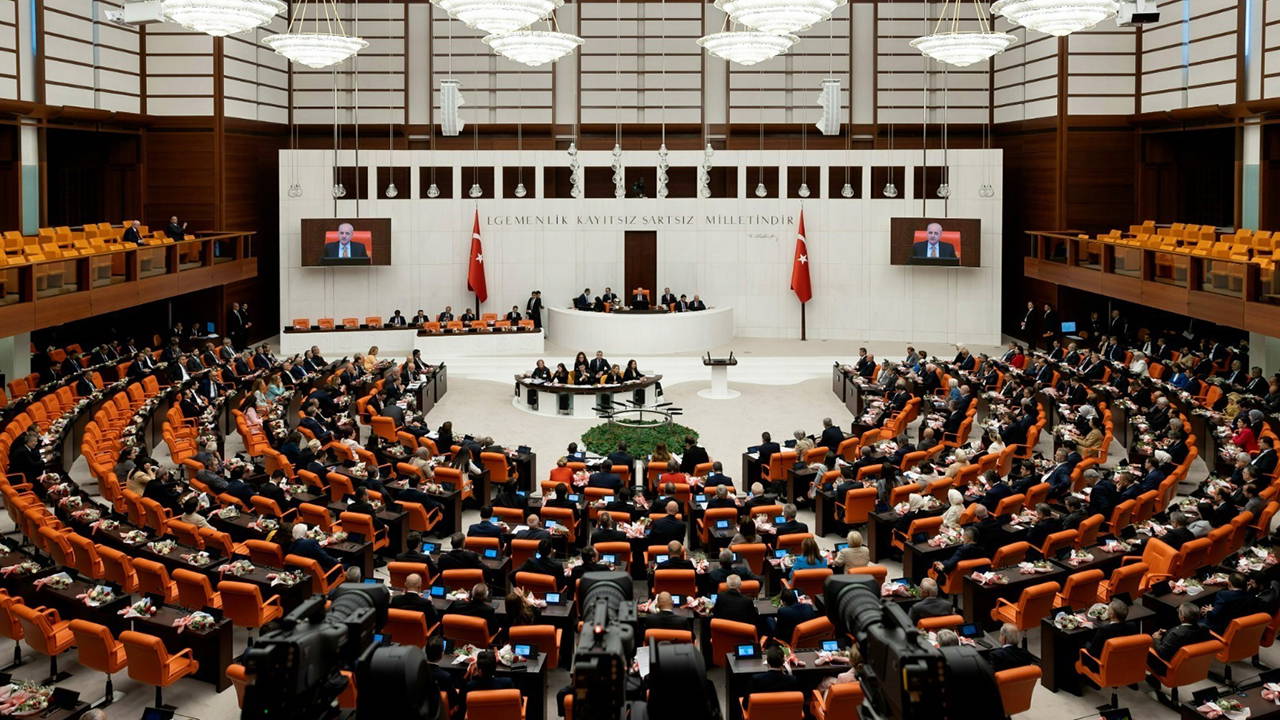
Somalia Grant Agreement Approved Amid Opposition Criticism
Translated from Turkish, summarized and contextualized by DistantNews.
TLDR
- The Turkish Parliament approved an agreement for an in-kind grant to Somalia, including the construction of an embassy building.
- Opposition parties criticized the government's policies, arguing they prioritize external interests over domestic production and national economy.
- The agreement passed with a majority vote, despite concerns raised about the asymmetry in Turkey's relations with Somalia.
The Grand National Assembly of Turkey has ratified a significant agreement with the Federal Republic of Somalia, paving the way for an in-kind grant that notably includes the construction of a new Turkish embassy in Mogadishu. This move underscores Turkey's deepening engagement with the Horn of Africa, a region where Ankara has been actively expanding its diplomatic and economic footprint. The approval, secured with a substantial majority in the parliamentary vote, signals a continued commitment to strengthening bilateral ties.
The issue is not just Somalia, the issue is a mentality. This mentality does not see the peasant's pasture, it sees the mining company's license. It does not see the farmer's tractor, it sees the crony's tender. It does not see the industrialist's VAT receivable, it sees the privilege abroad. The name of this mentality is not 'production economy.' The name of this mentality is not 'national economy' at all. At best, it is the understanding of an elite government that uses the nation's resources without priority, without oversight, and wastefully.
However, the ratification was not without its dissent. Opposition parties, including the IYİ Party and the DEM Party, voiced strong criticisms. Ayyüce Türkeş Taş of the IYİ Party argued that the government's approach, exemplified by the Somalia deal, reflects a flawed mindset that overlooks domestic needs like agricultural lands and national production in favor of external projects and perceived patronage. Hakkı Saruhan Oluç of the DEM Party, while acknowledging the historical and geopolitical significance of Turkey's role in the region, emphasized the need for broader alliances among peoples and faiths to foster regional development.
Turkey's role in this process is both historical and conjunctural. This develops all of us, strengthens all the peoples of the region, and common future can only be shaped and built this way.
Murat Emir of the CHP group specifically questioned the asymmetry in the proposed deal, particularly the provision of land for the embassy construction. He argued that such arrangements deviate from international norms and highlight an unbalanced relationship between Turkey and Somalia. While the government views this grant as a strategic investment and a demonstration of solidarity, critics contend that it raises questions about resource allocation and priorities. From a Turkish perspective, this agreement is framed as a continuation of Turkey's proactive foreign policy, aimed at enhancing its regional influence and supporting development partners. Yet, the internal debate reflects a broader national discussion on the balance between international commitments and domestic economic imperatives.
However, here, both before the esteemed Assembly and especially to all our nation, we must express that Turkey's relations with Somalia are asymmetrical and uncertain. This needs to be discussed here. Firstly, according to international practices, one country...
DistantNews Editorial
Originally published by Cumhuriyet in Turkish. Translated, summarized, and contextualized by our editorial team with added local perspective. Read our editorial standards.
More Stories


From Our Blog

What Gets Lost (and Found) When News Is Translated

The Critical Role of Diaspora Media in Global News

What Travellers Should Know About Countries with Restricted Press

A Digital Nomad's Guide to Following Local News

How the Same Story Looks Different in Different Countries
