


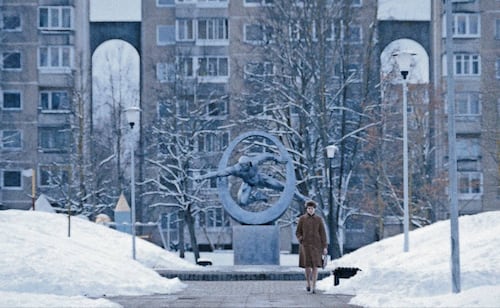
Star City Elevates Paranoia and Drama to the Moon
Translated from Spanish, summarized and contextualized by DistantNews.
TLDR
- Apple TV+'s new series 'Star City' explores the intense space race rivalry between the United States and the Soviet Union, focusing on the Soviet perspective.
- The show delves into the lives of astronauts, engineers, and intelligence officers, highlighting the risks taken to achieve the goal of reaching the Moon first.
- Actors and creators emphasize the series' historical accuracy and draw parallels between the Cold War paranoia and modern-day surveillance through social media and technology.
From the heart of Mexico City, El Universal brings you an in-depth look at 'Star City,' Apple TV+'s latest foray into historical drama, which promises to elevate paranoia and tension to lunar heights. This series, a spin-off of 'For All Mankind,' shifts its focus to the Soviet side of the space race, a narrative often less explored in Western media. It meticulously reconstructs the fierce competition between the US and the USSR for lunar dominance, culminating in the Soviet Union achieving the historic feat of landing the first man on the Moon.
Hay paralelismos, no somos tan diferentes a eso, vivimos en una sociedad en la que somos escuchados y vistos constantemente, se posicionó sobre nosotros de una manera casi imperceptible y solo lo aceptamos
Beyond the grand ambition of the space race, 'Star City' intimately portrays the personal sacrifices and perilous journeys of Soviet astronauts, engineers, and intelligence operatives. The series doesn't shy away from the pervasive atmosphere of espionage and suspicion that characterized the era. Actors Anna Maxwell Martin and Agnes O’Casey, who play key roles, highlight the chilling relevance of the show's themes to contemporary society. They point out how, even without a 'macabre government' behind it, modern life involves a voluntary surrender of privacy through social media and constant digital surveillance, a phenomenon eerily mirrored in the show's depiction of Soviet society.
Sí, lo hacemos de manera voluntaria, siempre aceptamos las cookies
Martin elaborates on how the fast-paced nature of modern urban life contributes to this acceptance of constant observation, making intrusive surveillance almost imperceptible and culturally ingrained. O’Casey humorously likens it to accepting cookies on websites, a casual acknowledgment of data collection that underscores the public's often-unwitting participation in a surveillance-driven world. The series' commitment to historical veracity is a point of pride for the cast, who commend the creators for their deep dive into the Soviet era and the Cold War's pervasive influence. 'Star City' thus offers a unique lens, not just on a pivotal historical moment, but on the enduring human condition of seeking progress while navigating the complex interplay of ambition, secrecy, and societal control.
Creo que lo que los chicos hicieron fue un clavado a la historia, lo que se intentó hacer una auténtica representación de cómo eran esos tiempos y bueno, la carrera espacial es muy real, como la Guerra fría que fue una idea muy presente para la URSS y los Estados Unidos
DistantNews Editorial
Originally published by El Universal in Spanish. Translated, summarized, and contextualized by our editorial team with added local perspective. Read our editorial standards.
More Stories

From Our Blog

What Press Freedom Means for the News You Read

What Gets Lost (and Found) When News Is Translated

The Critical Role of Diaspora Media in Global News

What Travellers Should Know About Countries with Restricted Press

A Digital Nomad's Guide to Following Local News
