


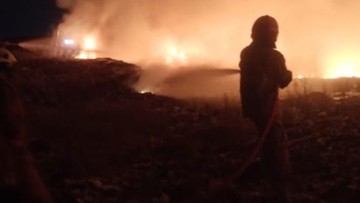
Surabaya Landfill Fire Suspected to Be Caused by Football Match Flares
Translated from Indonesian, summarized and contextualized by DistantNews.
At a glance
News
Named sources
Outcome reported
- A large fire broke out at the Benowo landfill in Surabaya, East Java, on Sunday night.
- Firefighters battled the blaze, which was largely extinguished by late Sunday night.
- The fire is suspected to have originated from grass fires ignited by flares from a football match, which then spread to the landfill.
A significant fire engulfed the Benowo landfill in Surabaya, East Java, on Sunday evening, July 19. Firefighters from the Surabaya Fire and Rescue Department (DPKP) responded promptly after receiving a report from a resident at 6:49 PM local time. The blaze, which involved a substantial amount of waste, was brought under control by joint efforts.
It was quite large, quite large. But it's in process, it's starting to decrease.
While the exact cause of the fire remains unconfirmed, officials suspect it originated from grass fires in an empty lot adjacent to the Gelora Bung Tomo Stadium. These grass fires are believed to have been ignited by flares used by spectators following a football match between Persebaya Surabaya and PSIS Semarang. The flames from the grass then reportedly spread to the landfill due to wind.
We don't know, but there was a football match, then there was a grass fire next to the stadium. Well, this could be the cause or what exactly is not yet known.
Firefighters worked through the night to contain and extinguish the fire. The main blaze was successfully put out by 9:05 PM, with the site declared secure by 11:58 PM. The operation involved eight fire engines and received support from 15 water tank units from the Surabaya Environmental Agency, along with seven heavy equipment units. An estimated 900 square meters in Block 1B of the 10-hectare landfill was affected by the fire.
The grass, yes. Not at the landfill itself.
DistantNews Editorial
Originally published by CNN Indonesia in Indonesian. Translated, summarized, and contextualized by our editorial team with added local perspective. Read our editorial standards.
More Stories


From Our Blog

What Gets Lost (and Found) When News Is Translated

The Critical Role of Diaspora Media in Global News

What Travellers Should Know About Countries with Restricted Press

A Digital Nomad's Guide to Following Local News

How the Same Story Looks Different in Different Countries
