

The Battle of Kenyérmező: The Legendary Triumph of Pál Kinizsi and Matthias's Black Army
Translated from Hungarian, summarized and contextualized by DistantNews.
TLDR
- The Battle of Kenyérmező was a significant victory for the Hungarian forces led by Pál Kinizsi and Matthias Corvinus's Black Army against the Ottoman Empire.
- The victory inflicted a severe prestige loss on the Ottoman military, leading them to abandon large-scale incursions into Transylvania for a considerable period.
- This triumph demonstrated Hungary's strength as a European power capable of defending its borders against the Sultan's army, with contemporary records noting tens of thousands of Ottoman casualties.
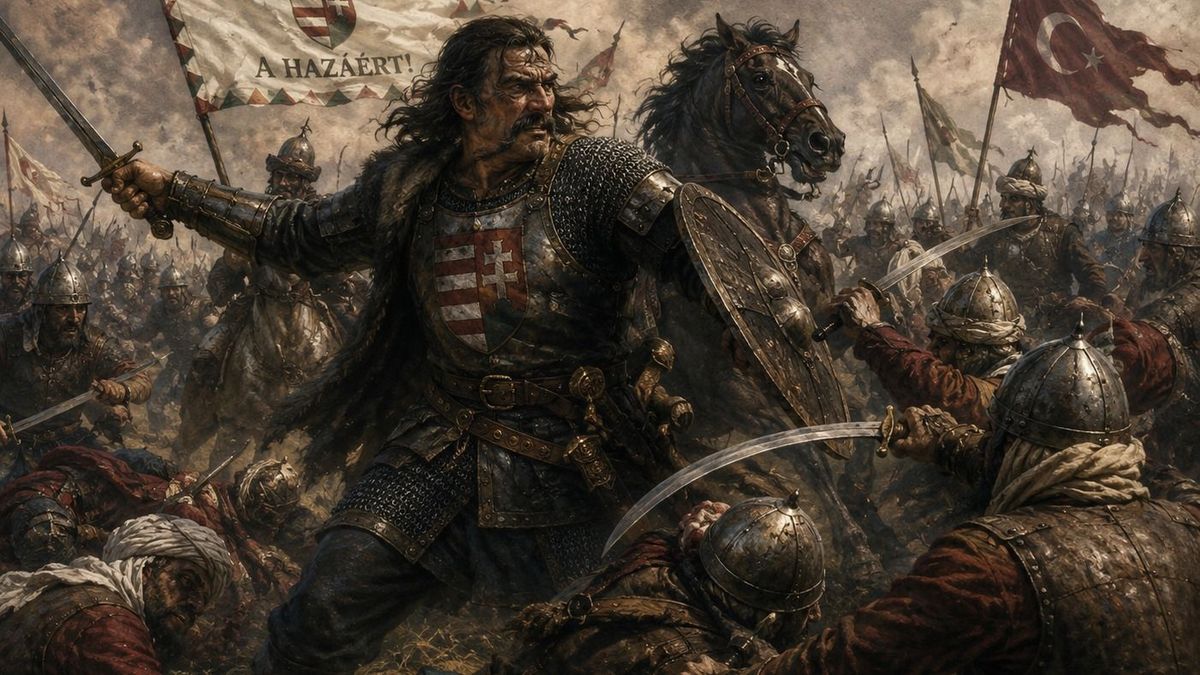
The Battle of Kenyérmező stands as a legendary triumph in Hungarian military history, a testament to the valor and strength of King Matthias Corvinus and his Black Army, led by the formidable Pál Kinizsi. This decisive victory over the Ottoman forces was not merely a military success; it was a powerful statement of Hungary's enduring power and its role as a bulwark of Christendom.
The Hungarian victory was not only a military success but also a political message: Matthias Corvinus's kingdom was still capable of defending its borders and confronting the Sultan's army as one of Europe's strongest states.
The historical accounts vividly describe the crushing defeat inflicted upon the Ottoman invaders, with estimates of tens of thousands of enemy casualties. This resounding win sent shockwaves across Europe, reinforcing Hungary's reputation as a formidable state capable of standing against the Sultan's might. The Ottoman leadership, humbled and severely weakened, was forced to reconsider its expansionist ambitions in the region, particularly in Transylvania.
The Hungarian armies not only stopped the Turkish advance but inflicted an unprecedented defeat on the Ottomans.
Beyond the battlefield, the legend of Pál Kinizsi himself was cemented by this victory. The tale of his 'victory dance,' reportedly lifting and tossing fallen Ottoman soldiers, paints a picture of a warrior of almost superhuman strength and unwavering dedication to his homeland. This enduring image of Kinizsi as a fearless defender resonates deeply within the Hungarian national consciousness, symbolizing the nation's resilience and its historical commitment to safeguarding its sovereignty.
Contemporary records speak of tens of thousands of Turkish casualties.
From a Hungarian perspective, this battle is more than just a historical event; it is a source of national pride and a reminder of Hungary's significant role in European history. While Western narratives might focus on the broader geopolitical implications, for Hungarians, it is a story of national heroism, strategic brilliance, and the unwavering spirit of its people against a formidable foe.
The news of the triumph quickly spread throughout Europe, once again proving that Hungary was one of the strongest bastions of the Christian world.
DistantNews Editorial
Originally published by Magyar Nemzet in Hungarian. Translated, summarized, and contextualized by our editorial team with added local perspective. Read our editorial standards.
More Stories


From Our Blog

Countries Without a Free Press: What You Need to Know

What Press Freedom Means for the News You Read

What Gets Lost (and Found) When News Is Translated

The Critical Role of Diaspora Media in Global News

What Travellers Should Know About Countries with Restricted Press
