


The Door Must Stay Open: What women in Nigerian universities have learned to fear
Translated from English, summarized and contextualized by DistantNews.
At a glance
In-depth
Sources not specified
Context piece
- Female lecturers in Nigerian universities often maintain a deliberate distance from students to protect themselves from accusations of misconduct.
- This caution stems from the pervasive corruption within universities, where sexual harassment and exploitation can be easily disguised.
- Maintaining professional boundaries, such as keeping office doors open and avoiding late-night meetings, has become a necessary survival tactic for female academics.
The silence within Nigerian universities carries a specific weight, often signaled by a hesitant knock on a lecturer's office door. Students arrive with academic queries, but these can quickly shift to uncomfortable encounters with faculty, hinting that academic futures may depend on "accommodating" supervisors. This is a consequence of corruption that is rarely discussed openly.
Ma, I have a problem.
Sexual harassment, coercion, and academic exploitation are often treated as isolated incidents involving morally corrupt individuals. However, the systemic damage lies in how these situations are handled: who is believed, whose reputation is protected, and the immense courage required to speak the truth. Corruption fundamentally alters the behavior of even those not directly involved, particularly women.
This is one of the least discussed consequences of corruption in our universities.
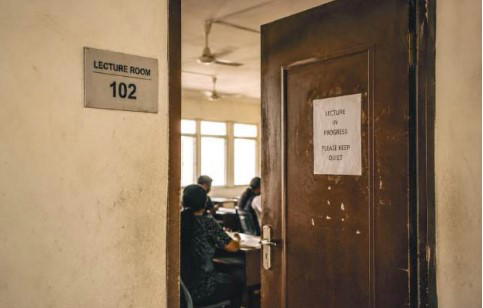
Female lecturers frequently adopt a deliberate distance, which can be misinterpreted as arrogance or formality. The reality is that this caution is a form of self-preservation. Keeping office doors open, ensuring visibility, and maintaining professional communication are not signs of unfriendliness but essential boundaries. Refusing to meet students alone late at night or avoiding casual familiarity are also part of this defensive architecture.
The open door is not hostility, it is a boundary.
These precautions can make women appear distant, but distance is often the price of safety. It is difficult for those who do not face such scrutiny to understand how ordinary behavior can be weaponized. While a male lecturer's informality might be seen as approachability, a female lecturer's similar demeanor risks misinterpretation. A strict man is perceived as disciplined; his female counterpart is often labeled difficult. A distant man is seen as authoritative; a distant woman is deemed proud. Women constantly calculate their actions, aware of how easily their conduct can be twisted. Professionalism transforms into a defensive strategy, teaching even innocent individuals to anticipate danger.
Corruption teaches innocent people to behave as though danger is always nearby.
DistantNews Editorial
Originally published by Vanguard in English. Translated, summarized, and contextualized by our editorial team with added local perspective. Read our editorial standards.
More Stories



From Our Blog

How the Same Story Looks Different in Different Countries

What Gets Lost (and Found) When News Is Translated

The Critical Role of Diaspora Media in Global News

What Travellers Should Know About Countries with Restricted Press

A Digital Nomad's Guide to Following Local News
