

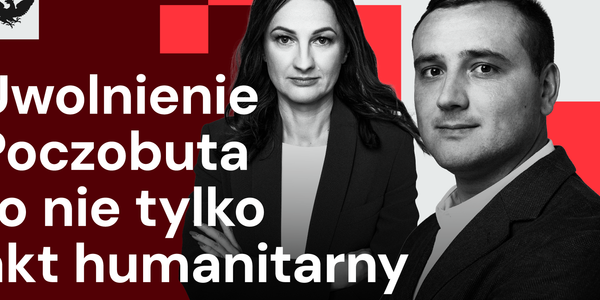
“The Point Is”: For Poczobut, Health and Return to Normalcy After Years of Suffering Are Most Important
Translated from Polish, summarized and contextualized by DistantNews.
TLDR
- Andrzej Poczobut's release is a symbolic moment, highlighting his health and the need for normalcy after years of suffering.
- His case underscores the importance of journalism, integrity, and courage, especially in authoritarian regimes.
- Poczobut is seen as a symbol of the fight for freedom and truth, and a bridge between Poland and Belarus.
The return of Andrzej Poczobut marks a profoundly symbolic moment, resonating deeply within Poland and beyond its borders. As Rusłan Szoszyn emphasizes, Poczobut's immediate priorities are his health and a return to normalcy after enduring years of hardship in a Belarusian prison. The stark reality of his physical and mental state, evident in photographs, serves as a grim reminder that Belarusian prisons are far from restorative environments. Poczobut's ordeal transcends his personal suffering; it compels a broader reflection on the essential role of journalism and the unwavering values that should define it. His steadfast commitment to truth and integrity, particularly within the confines of an authoritarian system, exemplifies the courage required of journalists acting as guardians of free speech. He is rightly hailed not only as a symbol of the struggle for freedom and truth but also as a vital link connecting Poland and Belarus. His resilience in the face of fundamental challenges has cemented his status as one of the most significant political prisoners under the Lukashenka regime. Beyond his journalistic endeavors, Poczobut has actively championed Polish identity and presence in Belarus, a role that gains critical importance amidst rising tensions and efforts to marginalize the Polish minority. His release, while a humanitarian act, is also intertwined with the complex political dynamics between Minsk and Warsaw. Belarus recognizes Poland as a key gateway to the European Union, adding a strategic dimension to Poczobut's case. The conversation also sheds light on the impact of international pressure, with figures like Trump capable of influencing Lukashenka. However, the path to change is acknowledged as slow and arduous, with the harsh realities of Belarusian prisons—including reports of mistreatment, lack of medical care, and violence—underscoring the immense suffering endured by political prisoners. Szoszyn's assertion that "pressure has meaning, the work of journalists has meaning" highlights the crucial role of public attention and media advocacy in securing Poczobut's release, offering a glimmer of hope for other political prisoners whose fates remain uncertain.
Looking at Andrzej's photo, we have no doubt that a Belarusian prison is not a sanatorium.
DistantNews Editorial
Originally published by Rzeczpospolita in Polish. Translated, summarized, and contextualized by our editorial team with added local perspective. Read our editorial standards.
More Stories



From Our Blog

What Gets Lost (and Found) When News Is Translated

The Critical Role of Diaspora Media in Global News

What Travellers Should Know About Countries with Restricted Press

A Digital Nomad's Guide to Following Local News

How the Same Story Looks Different in Different Countries
