


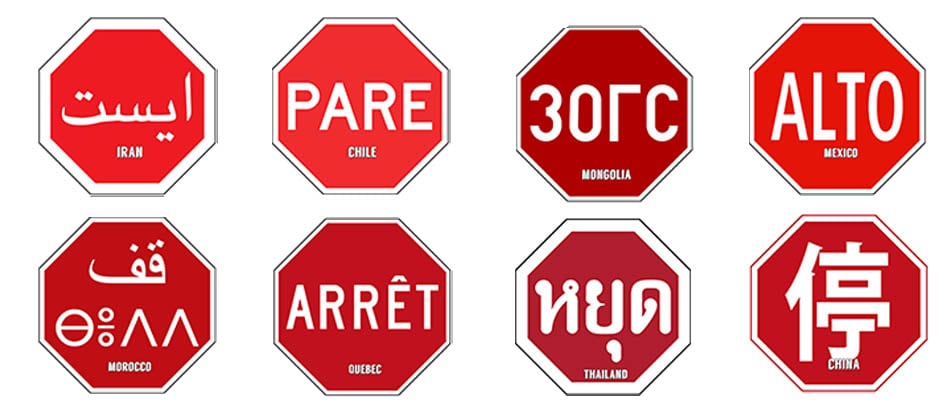
Traffic Signs Around the World: A Diverse Global Language
Translated from Spanish, summarized and contextualized by DistantNews.
TLDR
- Traffic signs, while universal in function, exhibit significant global diversity in design, shape, and symbolism.
- International agreements like the Vienna Convention on Road Traffic aim for standardization, but national adaptations create varied visual expressions.
- Variations are evident in stop signs, animal warning signs, and pedestrian crossings, reflecting local culture and biodiversity.
In Argentina, as in much of the world, traffic signs are a daily necessity. However, a closer look reveals a fascinating tapestry of global diversity, moving beyond mere function to reflect local culture and environment. While the Vienna Convention on Road Traffic strives for uniformity, the reality on the ground is a rich array of visual expressions.
Although their function is universal, their design, shape, and symbolism show notable global diversity.
Consider the ubiquitous stop sign. Though typically an octagonal red sign with white lettering, its historical forms and even current variations in countries like Ethiopia, Israel, and Pakistan, which use hand gestures, demonstrate that standardization is not absolute. Japan's inverted triangle stop sign is another prime example of unique national interpretation.
Although the red octagon is predominant, particularities persist.
Furthermore, warning signs for animals offer a vivid glimpse into local biodiversity and regional risks. From kangaroos in Australia to bears in the US and Russia, and camels in North Africa, these signs are not just regulatory but also educational, highlighting the specific fauna drivers might encounter. This local specificity is something that international news often overlooks, focusing instead on the broader regulatory aspects.
In Australia, kangaroo signs are common. In the United States and Russia, they warn of bears.
Even pedestrian crossings, a concept universally understood, display subtle cultural and graphical differences. The stylized figures can vary, reflecting local aesthetics and cultural norms. These variations, while seemingly minor, underscore how deeply ingrained local identity is, even in the most functional aspects of public infrastructure. For us in Argentina, understanding these differences enriches our travel experiences and appreciation for global diversity.
Pedestrian crossings also exhibit small cultural and graphic differences.
DistantNews Editorial
Originally published by La Nación in Spanish. Translated, summarized, and contextualized by our editorial team with added local perspective. Read our editorial standards.
More Stories



From Our Blog

What Gets Lost (and Found) When News Is Translated

The Critical Role of Diaspora Media in Global News

What Travellers Should Know About Countries with Restricted Press

A Digital Nomad's Guide to Following Local News

How the Same Story Looks Different in Different Countries
