


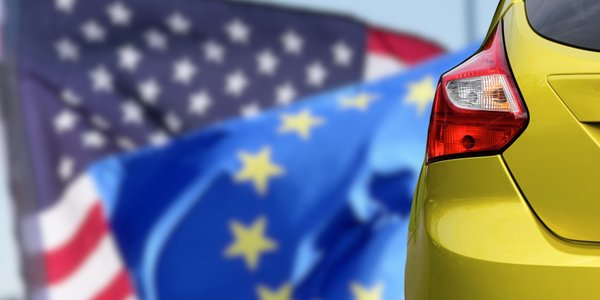
Trump Revives Tariff War, EU Prepares Response to 25% Auto Tariffs
Translated from Polish, summarized and contextualized by DistantNews.
TLDR
- Donald Trump has threatened to impose a 25% tariff on imported cars from the EU, accusing Brussels of failing to uphold a trade agreement.
- The US had previously imposed tariffs on EU cars, steel, and aluminum, later reducing some rates as part of a trade deal, but Trump now claims the EU has not fully complied.
- The European Commission rejects the US claims and is considering protective measures if the US proceeds with the tariff hike, which would significantly impact the European automotive industry.
Donald Trump's return to protectionist policies, specifically his threat to impose a 25% tariff on European cars, has sent shockwaves through the EU's automotive sector. This move, framed by Trump as a response to the EU's alleged non-compliance with a trade agreement, risks unraveling the delicate balance established by the Turnberry deal. The agreement, which saw US tariffs on European cars reduced from 27.5% to 15%, offered a degree of predictability for a crucial export market.
We are the most reliable partner in the world.
Brussels, through its trade representative Jamieson Greer and Commission spokesperson Thomas Regnier, has firmly rejected Washington's accusations. The EU maintains it has upheld its end of the bargain and is committed to the agreement. Regnier's assertion that the EU is "the most reliable partner in the world" underscores a stark contrast in how the transatlantic partners perceive their commitments. While the US administration, as reported by Bloomberg and Reuters, points to alleged delays and non-compliance, the EU emphasizes its consistent implementation and readiness to defend its interests.
The costs of additional tariffs would be enormous and would probably also hit consumers in the United States.
This dispute highlights a fundamental divergence in trade philosophy. For European automakers, like Germany's VDA and the ACEA, the potential tariff hike represents a significant economic threat, with warnings of substantial costs that could ultimately be borne by consumers on both sides of the Atlantic. The EU's stance, as articulated by the Commission, is not merely a defense of its industry but a broader statement about the importance of adhering to agreed-upon international trade rules. The narrative from Brussels is one of steadfastness and a commitment to protecting European businesses and citizens, a perspective often overshadowed in international reporting by the more bombastic pronouncements from Washington.
Washington will continue the plan to raise tariffs on car imports from the EU from 15 to 25 percent, although talks with European and German officials are ongoing.
DistantNews Editorial
Originally published by Rzeczpospolita in Polish. Translated, summarized, and contextualized by our editorial team with added local perspective. Read our editorial standards.
More Stories



From Our Blog

What Gets Lost (and Found) When News Is Translated

The Critical Role of Diaspora Media in Global News

What Travellers Should Know About Countries with Restricted Press

A Digital Nomad's Guide to Following Local News

How the Same Story Looks Different in Different Countries
