


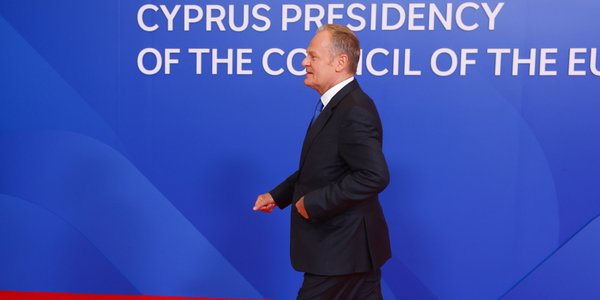
Tusk Loses Patience with Trump, But Sees No Alternative
Translated from Polish, summarized and contextualized by DistantNews.
TLDR
- Polish Prime Minister Donald Tusk expresses growing frustration with US foreign policy, particularly regarding its impact on European security and support for Ukraine.
- Tusk highlights concerns about US reliability within NATO and the potential for a reduced American commitment to the alliance.
- The article discusses the need for Europe to bolster its own defense capabilities and explores alternative security scenarios amidst perceived US unreliability.
As the leader of Poland, a nation acutely aware of its proximity to a resurgent Russia, Prime Minister Donald Tusk's growing impatience with the United States' foreign policy is more than just a diplomatic nuance; it's a matter of existential security. Tusk's recent remarks, published in the Financial Times, signal a profound shift in how Poland and potentially other Eastern European allies view the reliability of the US commitment to NATO. The core issue is not merely about rhetoric but about the tangible implications for collective defense, especially in the face of Russian aggression.
The biggest, most important question is whether the United States is ready to behave as loyally as is written in our (NATO) treaties.
The frustration stems from a perceived inconsistency and unpredictability in US actions, particularly highlighted by the recent conflict with Iran. The expenditure of vast amounts of ammunition by the US in this campaign raises serious questions about its capacity to simultaneously support Ukraine and maintain its own defense readiness. This creates a dangerous vacuum that Europe, and specifically Poland, must urgently address. The article rightly points out that Russia's own production of ballistic missiles far outpaces European capabilities, creating a critical window of vulnerability, especially as winter approaches.
Before the entire Eastern flank, my neighbors (...) there is a dilemma whether NATO remains an organization ready politically and logistically to respond, let's say, to an attempted attack by Russia.
While the North Atlantic Treaty Organization remains the ultimate guarantor of Poland's security, the current geopolitical climate necessitates a serious re-evaluation of European self-reliance. Tusk's implicit questioning of NATO's readiness to respond to Russian provocations, and his mention of the potential for strengthening Article 42.7 of the EU treaty (mutual assistance), suggests a search for alternative frameworks. This is not about abandoning the transatlantic alliance but about recognizing the need for a more robust and independent European defense posture. From Warsaw's perspective, the US's perceived wavering requires a proactive, rather than reactive, approach to ensuring regional stability.
Donald Tusk's frustration with the irrational policy of the United States has been growing for a long time. Iran tipped the scales.
DistantNews Editorial
Originally published by Rzeczpospolita in Polish. Translated, summarized, and contextualized by our editorial team with added local perspective. Read our editorial standards.
More Stories

From Our Blog

What Gets Lost (and Found) When News Is Translated

The Critical Role of Diaspora Media in Global News

What Travellers Should Know About Countries with Restricted Press

A Digital Nomad's Guide to Following Local News

How the Same Story Looks Different in Different Countries
