


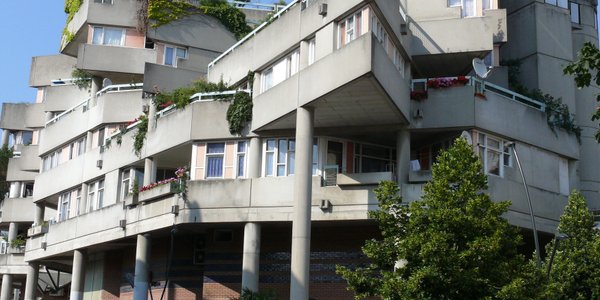
Uncertain Fate of Famous Parisian Suburb Estate: Brutalism vs. Bulldozers
Translated from Polish, summarized and contextualized by DistantNews.
TLDR
- The Îlot 8 housing complex in Saint-Denis, a significant example of French social housing architecture from the late 20th century, faces potential partial demolition.
- Local authorities plan a renovation project that includes demolishing some parts of the complex designed by Renée Gailhoustet and transforming it into a purely residential area with added amenities like elevators.
- Opponents, including residents and architects, fear the redevelopment will lead to gentrification and alter the original character of the iconic brutalist complex.
The Îlot 8 housing complex in Saint-Denis, a landmark of late 20th-century French social architecture, stands at a crossroads. Designed by the renowned architect Renée Gailhoustet, known for her work in social housing, the brutalist complex has long been a symbol of innovative urban planning aimed at serving the working class. Now, the local authorities' ambitious plan to revitalize this part of the city, as part of the National New Urban Renewal Program (NPNRU), threatens to fundamentally alter its character.
The proposed renovation by Agence RVA includes the demolition of certain sections of Gailhoustet's original design and the conversion of the multifunctional estate into a solely residential complex. While the architects assure that the project aims to preserve the iconic nature of Îlot 8 and introduce modern conveniences like elevators, a growing chorus of opposition is raising serious concerns. Residents, architects, and urban planners, united under the banner of "Le Collectif Îlot 8," fear that these changes will lead to gentrification and erase the unique identity of the estate.
The transformation they propose will happen without violating the original character of Renée Gailhoustet's project and that the aim of the undertaking is to protect the iconic complex.
From a French perspective, this debate touches upon the very essence of our approach to social housing and architectural heritage. Gailhoustet's work was not merely about providing shelter; it was about creating vibrant communities with integrated living, shopping, and recreational spaces. The potential transformation into a purely residential zone, stripped of its original multifunctional spirit, risks losing the social fabric that made Îlot 8 significant. While international coverage might focus on the architectural style or the urban renewal aspect, for us, it's about preserving the legacy of social architecture and ensuring that redevelopment serves existing communities rather than displacing them. The fear is that modernization, in this case, could inadvertently destroy the very heritage it claims to protect, a concern that resonates deeply within our national discourse on urban development and social equity.
The transformation of the complex into a purely residential object is inconsistent.
DistantNews Editorial
Originally published by Rzeczpospolita in Polish. Translated, summarized, and contextualized by our editorial team with added local perspective. Read our editorial standards.
More Stories



From Our Blog

What Gets Lost (and Found) When News Is Translated

The Critical Role of Diaspora Media in Global News

What Travellers Should Know About Countries with Restricted Press

A Digital Nomad's Guide to Following Local News

How the Same Story Looks Different in Different Countries
