


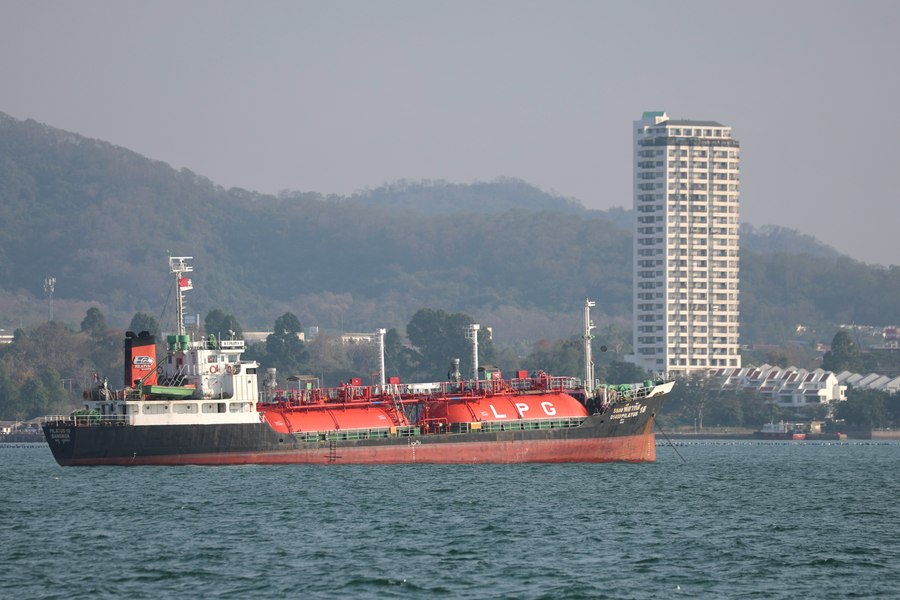
US Imposes Sanctions on Chinese Refinery, Dozens of Ships Over Iranian Oil Purchases
Translated from Romanian, summarized and contextualized by DistantNews.
TLDR
- The U.S. Treasury Department imposed sanctions on China's Hengli Petrochemical and dozens of vessels for allegedly purchasing Iranian oil.
- The sanctions, part of the "Economic Fury" operation, aim to cut off Iran's primary revenue source and curb its regional aggression and nuclear ambitions.
- This action targets a network of front companies and aging tankers used to circumvent sanctions, highlighting U.S. efforts to enforce maximum pressure on Iran.
The United States has intensified its pressure campaign against Iran by imposing significant sanctions on China's Hengli Petrochemical, a major buyer of Iranian oil, and a fleet of vessels involved in its illicit transport. This move, announced by the Treasury Department under the "Economic Fury" operation, is a clear signal that Washington is determined to choke off Tehran's primary source of income and, by extension, its capacity to fund regional proxy groups and its nuclear program.
Economic Fury imposes a financial stranglehold on the Iranian regime, limiting its aggression in the Middle East and helping to reduce its nuclear ambitions.
Hengli Petrochemical, one of China's largest independent refiners, has been reportedly acquiring discounted Iranian crude since 2023, generating hundreds of millions of dollars for the Iranian military. The U.S. Treasury has identified Hengli's alleged collaboration with Sepehr Energy Jahan Nama Pars Company, a firm described as a front for Iran's armed forces, as a key reason for the sanctions. This network, utilizing a complex web of intermediaries and aging tankers in a "shadow fleet," employs methods like ship-to-ship transfers on the high seas to obscure the origin of the oil, thereby circumventing international sanctions.
This action is a continuation of the "maximum pressure" strategy, aiming to limit Iran's oil exports and its ability to finance military activities and nuclear development. The U.S. Treasury Secretary Scott Bessent explicitly stated that "Economic Fury" aims to impose financial strangulation on the Iranian regime, thereby limiting its aggression in the Middle East and curbing its nuclear ambitions. The U.S. has also warned financial institutions in China, Hong Kong, the UAE, and Oman of secondary sanctions if they engage in transactions with Iran, underscoring the extraterritorial reach of U.S. financial policy.
We will continue to tighten the network of ships, intermediaries, and buyers that Iran relies on to transport its oil to global markets.
From our perspective at Adevărul, this development underscores the complex geopolitical landscape and the significant role China plays in the global oil market, even when it involves circumventing international sanctions. While the U.S. frames this as a necessary measure to counter Iranian aggression and nuclear proliferation, China's continued engagement with Iranian oil highlights the challenges in enforcing global sanctions regimes and the economic realities that often drive international trade. The U.S. administration's willingness to impose sanctions on major Chinese entities signals a potential escalation in economic tensions, with implications for global trade and energy markets.
If you buy Iranian oil or if Iranian funds are in your banks, we are prepared to impose secondary sanctions, a very harsh measure.
DistantNews Editorial
Originally published by Adevărul in Romanian. Translated, summarized, and contextualized by our editorial team with added local perspective. Read our editorial standards.
More Stories


From Our Blog

What Gets Lost (and Found) When News Is Translated

The Critical Role of Diaspora Media in Global News

What Travellers Should Know About Countries with Restricted Press

A Digital Nomad's Guide to Following Local News

How the Same Story Looks Different in Different Countries
