

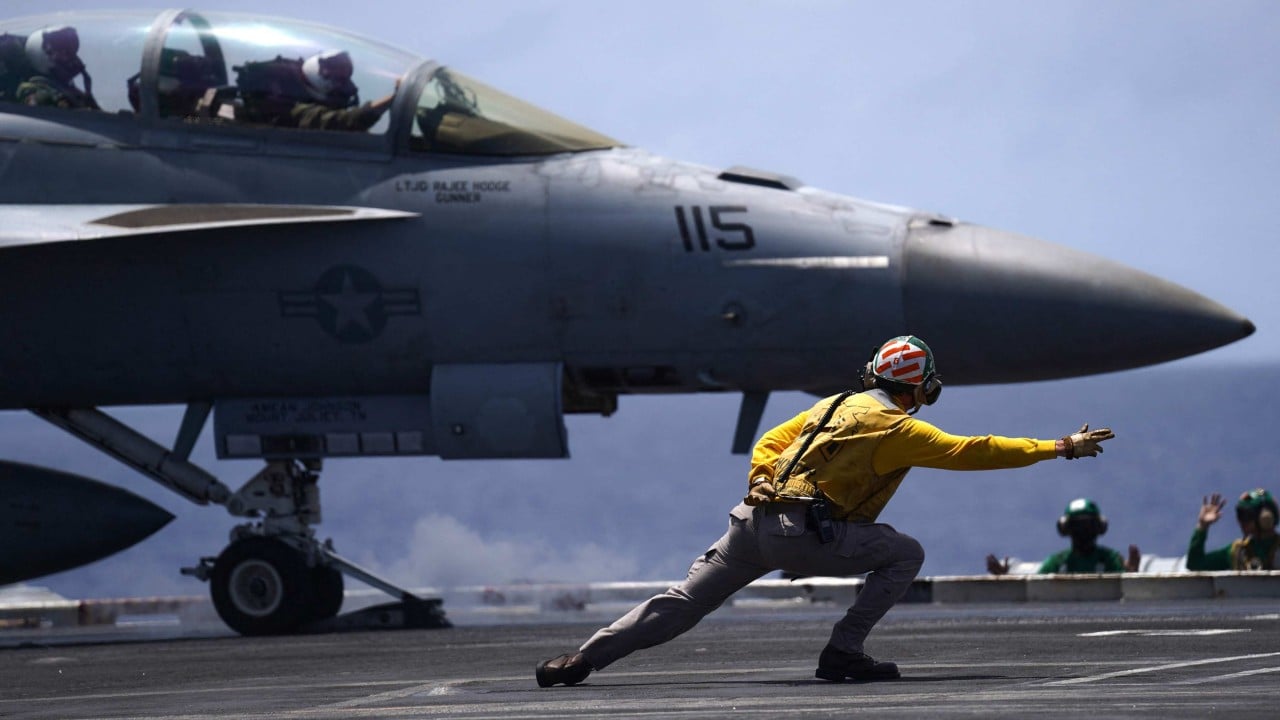
US-led Rimpac exercises integrate advanced tech to deter China
Translated from English, summarized and contextualized by DistantNews.
At a glance
News
Sources not specified
Outcome reported
- The US-led Rim of the Pacific (Rimpac) military exercises featured enhanced integration of new technologies among allied forces.
- The drills, involving 30 nations, focused on creating a networked system to find, track, and attack maritime targets, with China as a deterrent.
- A complex live-fire event included forces from six countries alongside the US, targeting retired warships with advanced weaponry.
This year's US-led Rim of the Pacific (Rimpac) military exercises around Hawaii showcased a significant leap in technological integration within allied operations, explicitly aimed at deterring Beijing. Experts noted the drills' focus on creating a unified network, linking troops on shore with aircraft, surface, and undersea vessels to simultaneously find, track, and attack maritime targets.
The world's largest maritime exercises, which ran from June 24 to July 31, involved forces from 30 nations. A particularly complex live-fire event brought together troops and weapons from six countries alongside the United States. Participants included Japan, South Korea, Australia, Canada, Chile, and Spain.
During these drills, multinational forces engaged in live-fire exercises, sinking two retired warships: the former guided-missile cruiser USS Mobile Bay and the amphibious assault ship USS Peleliu. A Spanish frigate fired a Harpoon missile at the Peleliu, while US and Japanese ground forces participated from the Pacific missile range facility in Hawaii, demonstrating advanced coordinated capabilities.
DistantNews Editorial
Originally published by South China Morning Post in English. Translated, summarized, and contextualized by our editorial team with added local perspective. Read our editorial standards.
More Stories
From Our Blog

Countries Without a Free Press: What You Need to Know

What Press Freedom Means for the News You Read

What Gets Lost (and Found) When News Is Translated

The Critical Role of Diaspora Media in Global News

What Travellers Should Know About Countries with Restricted Press
