


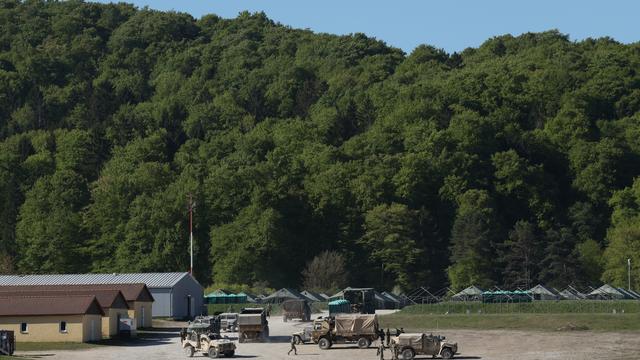
US Republicans Criticize Troop Drawdown in Germany, Cite Deterrence Concerns
Translated from German, summarized and contextualized by DistantNews.
TLDR
- Two prominent US Republicans have expressed concern over the planned withdrawal of 5,000 US troops from Germany.
- They argue that reducing the US military presence in Europe could undermine deterrence and send the wrong signal to Russia.
- The Republicans also linked the troop reduction to a potential cancellation of plans to station Tomahawk cruise missiles in Germany.
A significant debate is unfolding within US political circles regarding the planned reduction of American troops stationed in Germany. Two influential Republican lawmakers, Roger Wicker and Mike Rogers, chairmen of the Senate and House Armed Services Committees respectively, have voiced strong objections to the withdrawal of 5,000 US soldiers.
We are very concerned about the decision to withdraw a US brigade from Germany.
Their primary concern centers on the potential impact of this troop reduction on NATO's deterrence capabilities, particularly in the face of Russian aggression. They argue that scaling back the US military footprint in Europe could be misinterpreted by Moscow as a sign of weakening resolve, potentially emboldening President Putin. This perspective emphasizes the critical role of a robust US military presence in maintaining stability on the continent.
Furthermore, the Republican lawmakers have drawn a connection between the troop withdrawal and the fate of planned deployments of advanced weaponry. Specifically, they suggest that the reduction in forces might be linked to a reconsideration of stationing Tomahawk cruise missiles in Germany. These missiles, with their long-range capabilities, are seen as a crucial component of NATO's defense strategy, designed to bolster deterrence until newer medium-range systems become available.
Any significant change in the US troop presence in Europe must be coordinated with Congress and with the allies of the USA.
The lawmakers are calling for thorough consultation with Congress and allied nations before any significant changes are made to the US troop presence in Europe. They stress that even with increased defense spending by NATO allies, rebuilding conventional deterrence capabilities will require time and a consistent strategic approach. This stance reflects a broader concern among some US policymakers about the potential consequences of perceived unilateral actions on European security.
A premature US troop reduction in Europe could undermine deterrence and send the wrong signal to Russian President Vladimir Putin.
DistantNews Editorial
Originally published by Die Zeit in German. Translated, summarized, and contextualized by our editorial team with added local perspective. Read our editorial standards.
More Stories


From Our Blog

What Gets Lost (and Found) When News Is Translated

How the Same Story Looks Different in Different Countries

The Critical Role of Diaspora Media in Global News

What Travellers Should Know About Countries with Restricted Press

A Digital Nomad's Guide to Following Local News
