


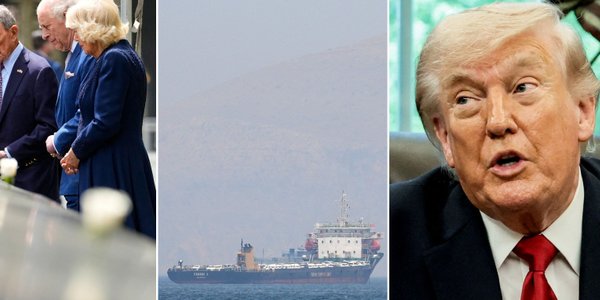
US Seeks Help to Unblock Strait of Hormuz; Russians Attack Odessa
Translated from Polish, summarized and contextualized by DistantNews.
TLDR
- The United States is forming a coalition called "Maritime Freedom Construct" to ensure safe passage through the Strait of Hormuz, which Iran has blocked.
- This blockage, a consequence of the US-Iran-Israel war, has caused a significant spike in global oil prices.
- In related news, former US President Donald Trump threatened to withdraw US troops from Germany, while Russian drones attacked Odessa.
Rzeczpospolita reports on critical global developments, highlighting the United States' efforts to assemble an international coalition, dubbed the "Maritime Freedom Construct," aimed at reopening the vital Strait of Hormuz. This strategic waterway, crucial for global oil transport, has been effectively blockaded by Iran following the escalation of the US-Iran-Israel conflict initiated on February 28th. The consequences have been severe, with oil prices soaring and gasoline prices in the US reaching their highest levels since 2022, underscoring the fragility of the global economy when such chokepoints are disrupted.
Wspólne działanie jest niezbędne, by zademonstrować zbiorową determinację i obciążyć wysokim kosztem irańskie działania godzące w tranzyt przez cieśninę Ormuz
The article details the US State Department's outreach to various nations, emphasizing the need for collective action to restore freedom of navigation and impose significant costs on Iran for its disruptive actions. The coalition's proposed functions include intelligence sharing, diplomatic coordination, and enforcing sanctions. This move signifies a serious attempt by the US to manage the fallout from the conflict and protect international trade routes, a move that resonates deeply with European allies who are heavily reliant on stable energy markets.
Adding another layer of international tension, the report notes former US President Donald Trump's threat to reduce the American military presence in Germany. This statement, made via Truth Social, comes amidst ongoing debates about defense spending and NATO commitments. Trump's past threats to withdraw troops over Germany's defense contributions suggest a potential shift in US foreign policy priorities, which could have significant implications for European security architecture.
Niemcy rozważają redukcję obecności wojskowej w Niemczech, a decyzja w tej sprawie ma zapaść wkrótce.
Furthermore, the report touches upon the ongoing conflict with Russia, mentioning a drone attack on Odessa. While the article focuses on the US-led coalition and Trump's statements, the mention of the Russian attack serves as a stark reminder of the broader geopolitical instability. From our perspective in Poland, these events are not isolated incidents but interconnected facets of a complex and dangerous geopolitical landscape. The security of Eastern Europe, the stability of energy markets, and the reliability of transatlantic alliances are all intertwined, making these developments of paramount importance to our national security and regional stability. The international community's response to these challenges will undoubtedly shape the future security environment for years to come.
W nocy doszło do ataku rosyjskich dronów na Odessę. W ataku ucierpiały budynki mieszkalne, budynek administracyjny i parking
DistantNews Editorial
Originally published by Rzeczpospolita in Polish. Translated, summarized, and contextualized by our editorial team with added local perspective. Read our editorial standards.
More Stories

From Our Blog

What Gets Lost (and Found) When News Is Translated

The Critical Role of Diaspora Media in Global News

What Travellers Should Know About Countries with Restricted Press

A Digital Nomad's Guide to Following Local News

How the Same Story Looks Different in Different Countries
