

US Supreme Court Strikes Down Voting District, Sparking Debate on Race and Rights
Translated from Polish, summarized and contextualized by DistantNews.
TLDR
- The US Supreme Court struck down a congressional district in Louisiana with a Black majority, ruling 6-3 that race was the dominant factor in its creation, violating the Constitution.
- The decision, authored by Justice Samuel Alito, is seen by critics as weakening the Voting Rights Act of 1965, a landmark law protecting minority voting power.
- While supporters, including former President Trump, hailed it as a victory for equal protection, opponents fear it will reduce representation for Black, Hispanic, and Asian voters.
The American Supreme Court's recent 6-3 decision to invalidate a congressional district in Louisiana, citing race as the dominant factor in its creation, has ignited a fierce debate about the Voting Rights Act and the very nature of equality in the United States.
The Voting Rights Act was intended to enforce the Constitution – not to conflict with it.
While the majority opinion, penned by Justice Samuel Alito, framed the ruling as a victory for "equal protection under the law" and a return to the Voting Rights Act's "original intent," many civil rights advocates and Democratic politicians see it as a significant blow to minority representation. They argue that this decision, following a series of rulings that have gradually weakened the 1965 Act, effectively undermines a crucial tool designed to ensure that racial minorities have a meaningful voice in government.
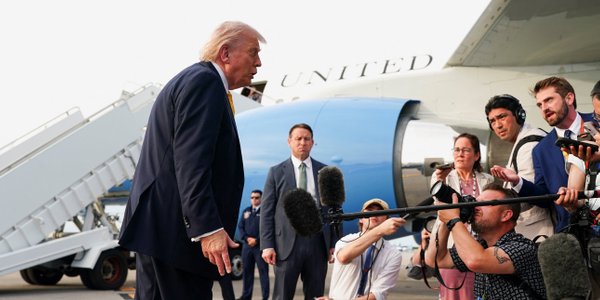
This ruling is a victory for 'equal protection under the law,' thanking Alito for an opinion that restores the Voting Rights Act to its 'original intent.'
From our perspective at Rzeczpospolita, this case highlights the deep divisions within American society regarding race and representation. The Voting Rights Act, born out of the Civil Rights Movement, was a monumental step towards rectifying historical injustices. Its weakening, critics contend, could lead to a rollback of progress, disproportionately affecting Black, Hispanic, and Asian communities by reducing their elected representation.
The decision in practice undermines one of the key pillars of the act, allowing legislatures to weaken minority voting power, and Republican states to change congressional maps under the pretext that they favor minority groups.
The framing of this decision as a win for "equality" by some, while others decry it as a step backward for civil rights, underscores the complex and often contentious nature of these issues in the US. It raises fundamental questions about how to balance the principle of equal protection with the need to ensure fair representation for all demographic groups in a diverse democracy. The implications of this ruling will likely be felt for years to come, shaping the political landscape and the ongoing struggle for voting rights.
Section 2 of the Voting Rights Act was a protective mechanism that prevented politicians from creating maps 'designed to weaken and silence our voice,' arguing that the court has made this protection 'almost entirely meaningless.'
DistantNews Editorial
Originally published by Rzeczpospolita in Polish. Translated, summarized, and contextualized by our editorial team with added local perspective. Read our editorial standards.
More Stories



From Our Blog

What Gets Lost (and Found) When News Is Translated

The Critical Role of Diaspora Media in Global News

What Travellers Should Know About Countries with Restricted Press

A Digital Nomad's Guide to Following Local News

How the Same Story Looks Different in Different Countries
