


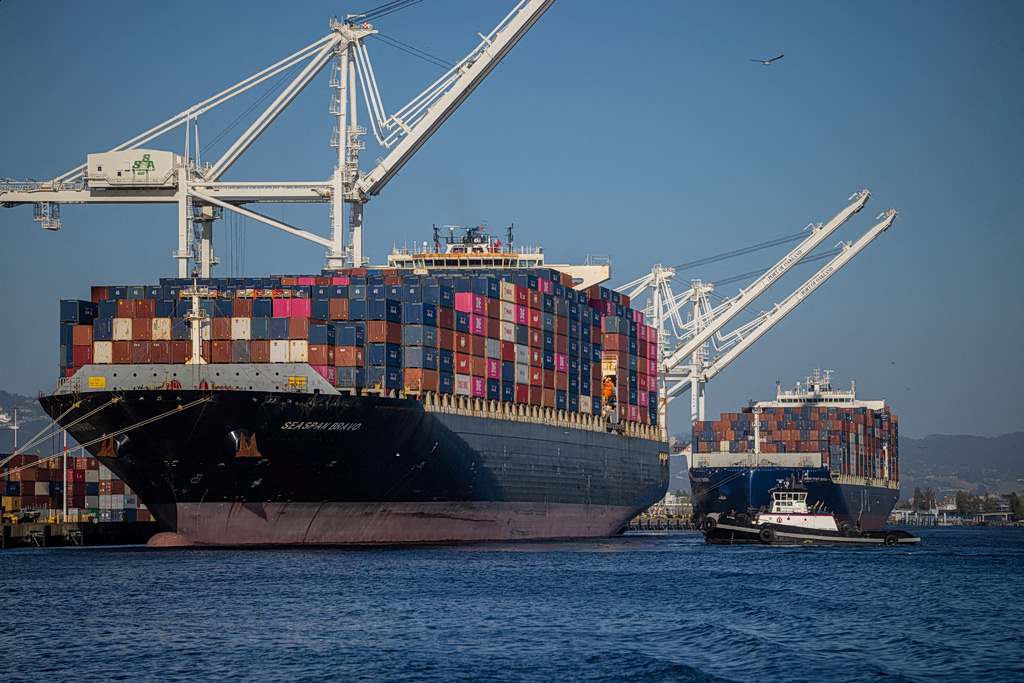
US trade deficit widens as imports outpace exports amid global uncertainty
Translated from Greek, summarized and contextualized by DistantNews.
TLDR
- The US trade deficit widened by 4.4% in March to $60.3 billion, indicating strong domestic demand but a heavy reliance on imports.
- Imports increased by 2.3%, driven by vehicles, consumer goods, and high-tech equipment, while exports grew by 2%, mainly due to oil shipments.
- Heightened tensions in the Strait of Hormuz add to global trade uncertainty, impacting energy prices and shipping costs.
The United States' trade deficit has continued to expand, reaching $60.3 billion in March, a 4.4% increase from the previous month. This widening gap underscores a persistent economic dynamic: robust domestic consumption fueling a significant reliance on imported goods, even as exports show moderate growth. The surge in imports, particularly in sectors like vehicles, consumer products, and advanced technology, reflects the strength of the American consumer and business investment in crucial areas like artificial intelligence.
While exports saw a 2% increase, primarily boosted by oil shipments, they could not offset the larger rise in imports. This imbalance places a drag on GDP growth and highlights a long-standing challenge for the U.S. economy: reconciling strong internal demand with external competitiveness. As the nation aims to bolster domestic manufacturing and exports, these figures serve as a cautionary signal about the path ahead.
Compounding these domestic economic trends is a volatile international landscape. Escalating tensions involving Iran and disruptions in the Strait of Hormuz introduce significant uncertainty into global trade flows. This critical energy chokepoint's stability is vital for both energy prices and the overall cost of international commerce. The confluence of the growing trade deficit and geopolitical instability reveals the delicate balance of the global economy, with the U.S. remaining a key demand driver but increasingly exposed to external risks.
DistantNews Editorial
Originally published by Ta Nea in Greek. Translated, summarized, and contextualized by our editorial team with added local perspective. Read our editorial standards.
More Stories



From Our Blog

What Gets Lost (and Found) When News Is Translated

The Critical Role of Diaspora Media in Global News

What Travellers Should Know About Countries with Restricted Press

A Digital Nomad's Guide to Following Local News

How the Same Story Looks Different in Different Countries
