

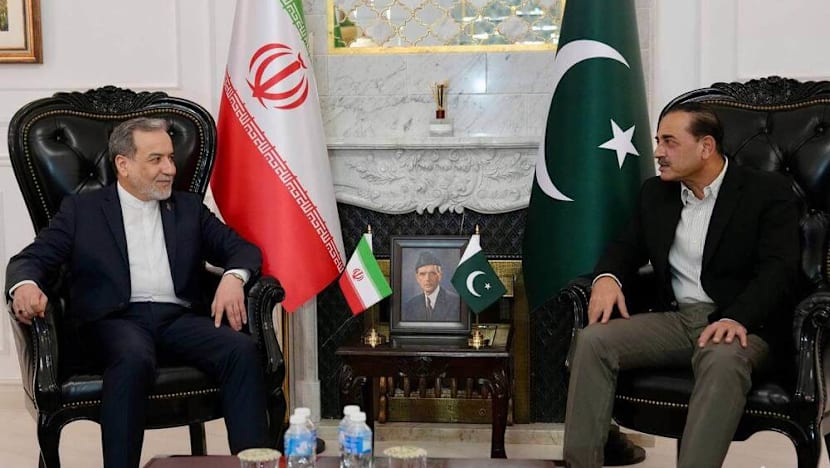

US urges Taiwan parliament to pass 'comprehensive' defense budget amid stalled talks
Translated from English, summarized and contextualized by DistantNews.
TLDR
- The U.S. is urging Taiwan's parliament to pass a comprehensive defense budget, emphasizing the need for integrated air and missile defense systems and drones.
- Taiwan's President Lai Ching-te proposed $40 billion in supplemental defense spending to deter China, but parliamentary talks have stalled due to opposition concerns about transparency.
- Delays in passing the budget could jeopardize Taiwan's position in the queue for U.S. weapons, while opposition KMT chairwoman Cheng Li-wun advocates for a balanced approach between China and the U.S.
The United States is applying significant diplomatic pressure on Taiwan's parliament to approve a substantial defense budget, framing it as crucial for the island's security and its ability to deter potential aggression from mainland China. Raymond Greene, the de facto U.S. ambassador, stressed the importance of a 'comprehensive budget package,' highlighting the global demand for advanced defense systems like integrated air and missile defense and drones, as seen in conflicts in the Middle East and Ukraine.
This would not only send a critical signal to the international community, but is also essential for ensuring Taiwan acquires the full range of defence capabilities it has requested
This push comes as Taiwan's parliament, led by the opposition Kuomintang (KMT), has stalled discussions on President Lai Ching-te's proposed $40 billion supplemental defense spending. While the KMT acknowledges the need for increased defense capabilities, they are wary of approving what they term 'blank cheques,' demanding greater transparency and detail from the government regarding the allocation of funds. This internal political deadlock risks Taiwan's strategic position, potentially impacting its access to vital U.S. weaponry.
As evidenced on the battlefields of the Middle East and Ukraine, these systems are not only critically important but are also in extremely high demand worldwide
Adding a layer of complexity, KMT Chairwoman Cheng Li-wun, who recently met with Chinese President Xi Jinping, is scheduled to visit the U.S. in June. Her stance suggests a desire for Taiwan to navigate its relationship with both China and the U.S. without being forced into an exclusive choice. This delicate balancing act reflects a broader debate within Taiwan about its geopolitical orientation and security strategy, with the island caught between the strategic interests of its primary arms supplier and its powerful neighbor.
Who would be so foolish as to keep saying all day long that we have to choose between mainland China and the United States?
DistantNews Editorial
Originally published by The Straits Times in English. Translated, summarized, and contextualized by our editorial team with added local perspective. Read our editorial standards.
More Stories


From Our Blog

What Gets Lost (and Found) When News Is Translated

The Critical Role of Diaspora Media in Global News

What Travellers Should Know About Countries with Restricted Press

A Digital Nomad's Guide to Following Local News

How the Same Story Looks Different in Different Countries
