

US warns shippers of sanctions if they pay "toll" to Iran for Hormuz passage
Summarized and contextualized by DistantNews.
TLDR
- The U.S. Treasury Department warned shipping companies against paying "tolls" to Iran for passage through the Strait of Hormuz, citing potential sanctions.
- Iranian authorities have allegedly demanded payments in various forms, including fiat currency, digital assets, and in-kind contributions, for safe passage.
- The advisory reiterates that U.S. persons are generally prohibited from engaging in transactions with the Iranian government, and non-U.S. persons risk secondary sanctions.
The United States has issued a stern warning to the global shipping industry, cautioning against any payments made to Iran for safe passage through the critical Strait of Hormuz. The U.S. Treasury Department's Office of Foreign Assets Control (OFAC) has alerted maritime operators to the potential for sanctions if they comply with alleged Iranian demands for "toll" payments. This advisory underscores the U.S. commitment to disrupting Iran's illicit financial activities and maintaining freedom of navigation in vital waterways.
OFAC's advisory highlights that these alleged payments can take numerous forms, ranging from traditional fiat currency and digital assets to informal swaps and even in-kind contributions routed through seemingly legitimate organizations. Regardless of the method, the Treasury Department emphasizes that such transactions carry significant sanctions risks. This broad warning aims to deter any financial engagement with the Iranian regime that could be construed as support for its destabilizing activities or its sanctioned entities, including the Islamic Revolutionary Guard Corps (IRGC).
OFAC is issuing this alert to warn U.S. and non-U.S. persons about the sanctions risks of making these payments to, or soliciting guarantees from, the Iranian regime for safe passage. These risks exist regardless of payment method.
The U.S. government reiterates its prohibition on transactions between U.S. persons and the Iranian government, unless specifically authorized. Furthermore, the advisory explicitly warns non-U.S. persons that they too could face secondary sanctions, potentially cutting off their access to the U.S. financial system, if they engage in dealings with the Iranian government or the IRGC. This includes a caution against interacting with Iranian digital asset exchanges, which are designated as blocked financial institutions.
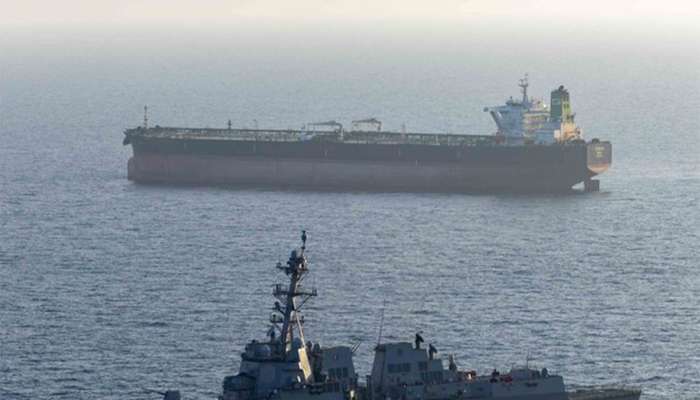
This proactive measure by the U.S. Treasury Department reflects a broader strategy to exert pressure on Iran's economy and its ability to fund activities deemed threatening to regional and international security. By targeting the financial flows associated with passage through the Strait of Hormuz, a crucial chokepoint for global oil transport, the U.S. aims to limit Iran's revenue streams and enforce compliance with international sanctions regimes. The ongoing U.S. naval presence and monitoring in the region further signal a determination to ensure maritime security and deter any actions that could jeopardize international trade.
Non-U.S. persons may risk exposure to sanctions for engaging in transactions with the Government of Iran and the IRGC that are not otherwise exempt or authorised for U.S. Persons. This risk to non-U.S. Persons includes secondary sanctions on participating foreign financial institutions, which could prohibit or restrict such foreign financial institutions' access to the U.S. financial system.
DistantNews Editorial
Originally published by Times of Oman. Summarized and contextualized by our editorial team with added local perspective. Read our editorial standards.
More Stories

From Our Blog

What Gets Lost (and Found) When News Is Translated

The Critical Role of Diaspora Media in Global News

What Travellers Should Know About Countries with Restricted Press

A Digital Nomad's Guide to Following Local News

How the Same Story Looks Different in Different Countries
