

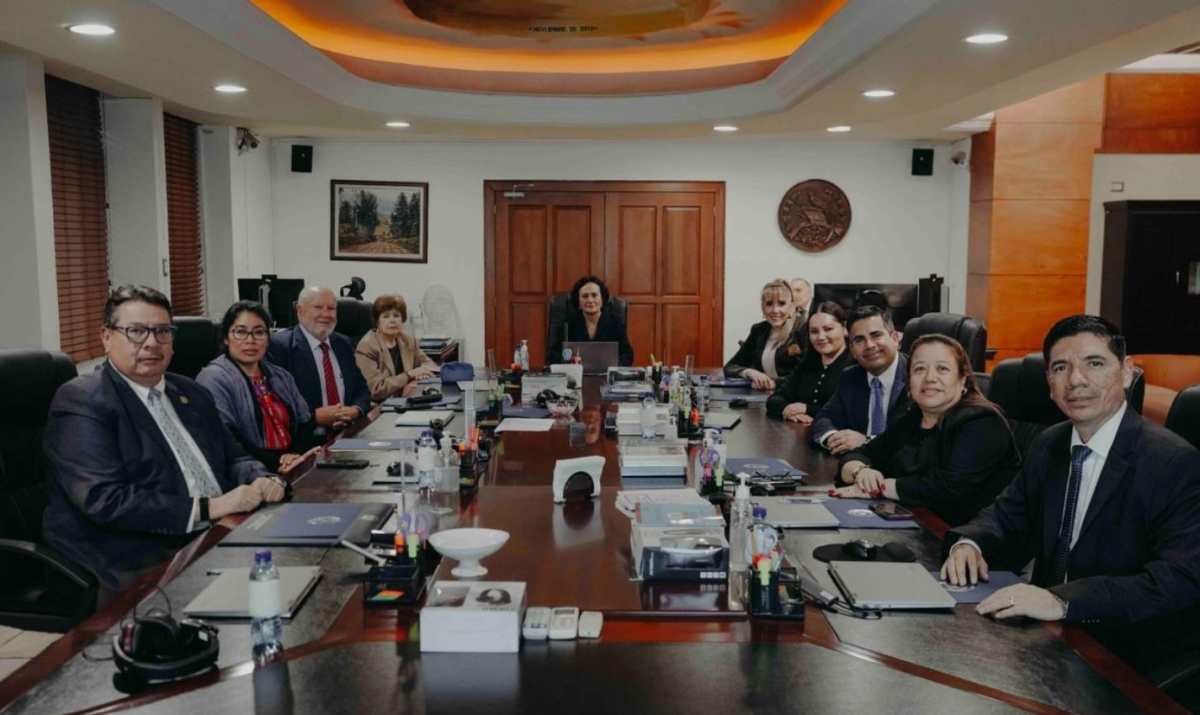

Usac's Predictable Capture: An Analysis of Power and Incentives
Translated from Spanish, summarized and contextualized by DistantNews.
TLDR
- The article analyzes the University of San Carlos (Usac) in Guatemala through the lens of public choice theory, examining the relationship between rules, incentives, and political power.
- Usac possesses significant autonomy and a constitutional mandate for 5% of state revenue, independent of performance, creating a unique governance structure.
- The university's influence extends to the justice system, the Monetary Board, and professional associations, making control of Usac a means to shape broader political power.
Prensa Libre's analysis delves into the complex dynamics governing the University of San Carlos (Usac), Guatemala's state university. Employing the framework of public choice theory, the article dissects how Usac's unique legal and political structure, enshrined in the Constitution, shapes its operations and influence. The piece argues that Usac's considerable autonomy, coupled with a guaranteed 5% of state revenue irrespective of efficiency, creates an environment ripe for the "capture" of the institution by organized minorities.
The analysis highlights the paradox of Usac's autonomy. While intended to safeguard academic freedom and institutional independence, its extensive prerogatives, including self-governance and internal norm-setting, are presented as potentially problematic when combined with other factors. The university's role as a constitutional monopoly in higher education and its significant financial resources, protected by law, are examined as key elements contributing to its unique position.
Beyond its academic functions, Usac wields considerable political influence. The article details its sway over the justice system, particularly through its role in the selection commissions for judicial appointments. Furthermore, its involvement with the Monetary Board, the Guatemalan Institute of Social Security (IGSS), and various professional colleges underscores its deep integration into the nation's political and economic architecture. Controlling Usac, therefore, is not merely about managing an educational institution; it is about accessing and shaping broader political power.
The electoral system for Usac's rector, which includes professors, students, and alumni, is identified as a critical juncture where external actors—political parties, elites, and interest groups—can exert influence. This system fosters a corporatist political arena, driven by clientelism and alliances, rather than a purely academic one. Prensa Libre's critical perspective suggests that this misalignment between public funding and internal control by organized groups leads to outcomes that may not serve the broader public interest, making the situation at Usac 'predictable' based on its established rules and incentives.
DistantNews Editorial
Originally published by Prensa Libre in Spanish. Translated, summarized, and contextualized by our editorial team with added local perspective. Read our editorial standards.
More Stories

From Our Blog

What Gets Lost (and Found) When News Is Translated

The Critical Role of Diaspora Media in Global News

What Travellers Should Know About Countries with Restricted Press

A Digital Nomad's Guide to Following Local News

How the Same Story Looks Different in Different Countries
