


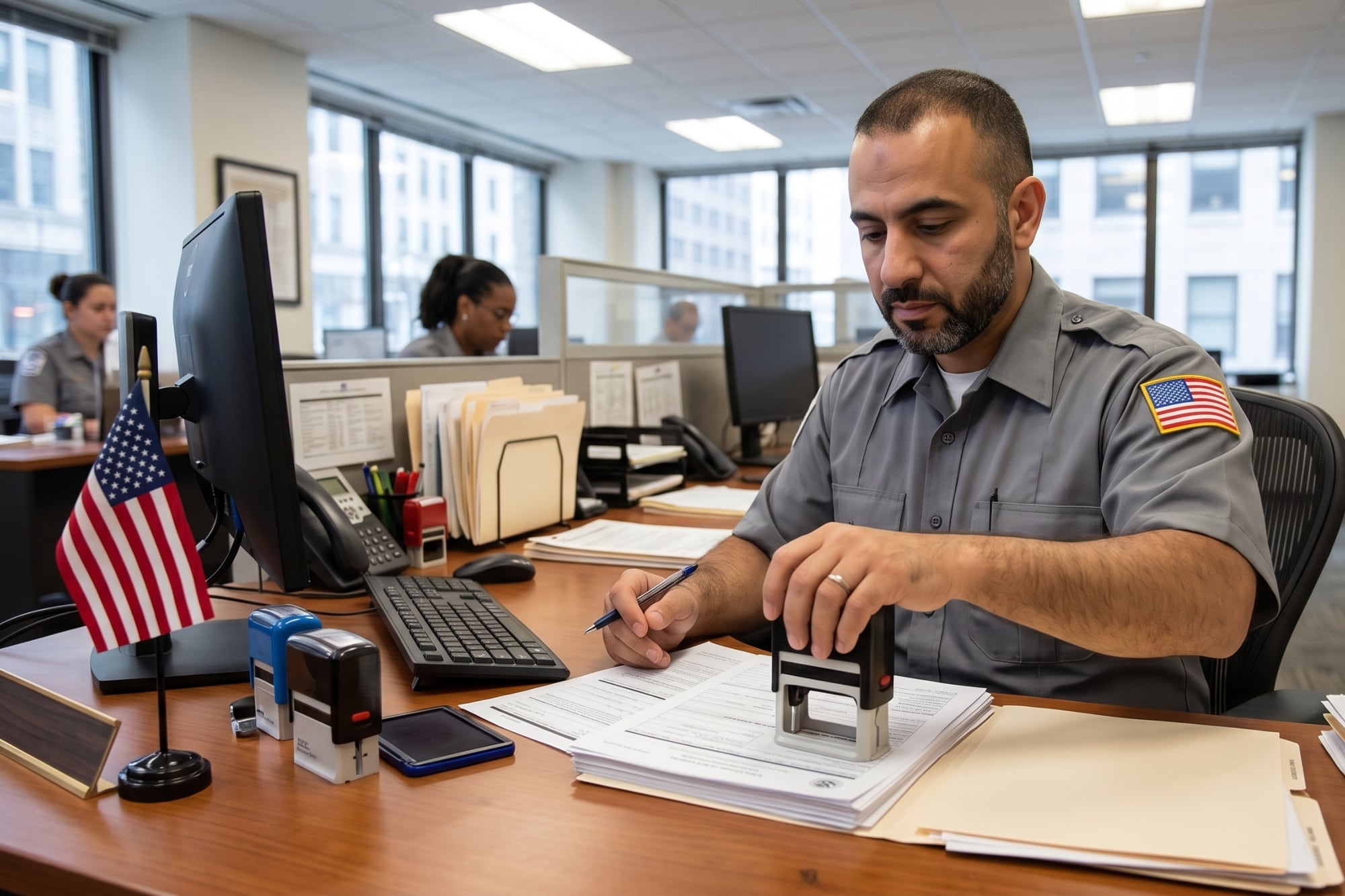
USCIS Proposes Changes to AR-11 Form, Potentially Linking Address Updates to Deportation Cases
Translated from Spanish, summarized and contextualized by DistantNews.
TLDR
- The U.S. government has proposed changes to the AR-11 form, used by non-citizens to report address changes to USCIS.
- The proposed changes would allow the Department of Homeland Security to request additional information, including data on income-based public benefits, employment, and studies.
- This information could be used for immigration enforcement, including deportation cases related to the public charge rule, with a public comment period open until July 6, 2026.
The United States government, through the Department of Homeland Security (DHS), is signaling a significant shift in how it handles immigration forms and enforcement. The proposed modifications to the AR-11 form, the standard notification for address changes by non-citizens, signal a more rigorous approach to immigration law compliance.
By seeking to collect data on public benefits, employment, and education, USCIS aims to identify potential violations related to the "public charge" rule and other immigration law infractions. This move underscores the administration's commitment to tightening immigration controls and ensuring that non-citizens adhere strictly to their legal obligations while residing in the U.S.
The inclusion of information on income-based public benefits is particularly noteworthy, as it directly links the use of social programs to immigration status and potential deportation. This expansion of data collection reflects a broader trend of increased scrutiny on the intersection of immigration and social welfare, aiming to deter misuse of public resources and uphold the integrity of the immigration system.
DistantNews Editorial
Originally published by La Nación in Spanish. Translated, summarized, and contextualized by our editorial team with added local perspective. Read our editorial standards.
More Stories



From Our Blog

What Gets Lost (and Found) When News Is Translated

The Critical Role of Diaspora Media in Global News

What Travellers Should Know About Countries with Restricted Press

A Digital Nomad's Guide to Following Local News

How the Same Story Looks Different in Different Countries
