


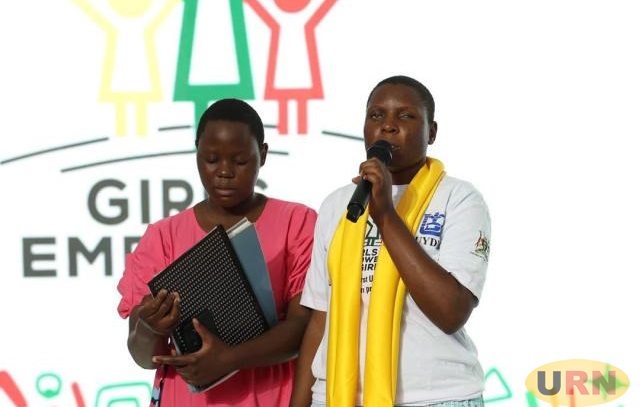
Visually impaired student’s journey and the impact of girls empowering programme
Summarized and contextualized by DistantNews.
TLDR
- Joseline Namutebi, a visually impaired student in Uganda, had her education transformed by the Girls Empowering Girls (GEG) program.
- The program provided financial assistance for her school fees and supported her mother, enabling her to continue her studies.
- Namutebi advocates for ending the stigma and neglect of persons with disabilities, emphasizing that 'inability is the worst disability.'
The Girls Empowering Girls (GEG) program in Kampala, Uganda, has demonstrably changed the trajectory of lives, with Joseline Namutebi's story serving as a powerful testament to its impact. Namutebi, a visually impaired student from St. Francis Secondary School for the Blind, found her educational future uncertain after completing her primary examinations in 2020. The GEG program, implemented by the Kampala Capital City Authority (KCCA) in partnership with UNICEF and the Belgian government, intervened by covering her school fees and providing crucial financial support to her mother, thereby ensuring her continued education.
I had no hope of continuing with my education and stayed at home for some time.
Beyond financial aid, the program's mentorship and empowerment initiatives have significantly boosted Namutebi's confidence and sense of purpose. She shared her journey at the program's closing event, highlighting that disability should not be a barrier to potential. Her poignant statement, 'Inability is the worst disability, when a person with a disability can speak and develop skills, that is not inability, i am pleased with my disability because disability is not inability,' powerfully reframes perceptions of disability. She urged communities to dismantle stigma and neglect, advocating for greater inclusion and support for persons with disabilities.
Inability is the worst disability, when a person with a disability can speak and develop skills, that is not inability, i am pleased with my disability because disability is not inability.
As the six-year GEG program concludes, Namutebi, now in Senior Six and pursuing a challenging academic combination, appeals for continued support to achieve her dream of a university education. Her experience underscores the vital role of targeted social protection initiatives in empowering vulnerable adolescent girls in urban settings, particularly those most at risk, including girls living with disabilities. The program's success, combining mentorship, cash transfers, and referral systems, offers a model for addressing complex social challenges and fostering brighter futures.
She also called on communities to end stigma and neglect of persons with disabilities, urging greater inclusion and support.
DistantNews Editorial
Originally published by The Independent Uganda. Summarized and contextualized by our editorial team with added local perspective. Read our editorial standards.
More Stories


From Our Blog

What Gets Lost (and Found) When News Is Translated

The Critical Role of Diaspora Media in Global News

What Travellers Should Know About Countries with Restricted Press

A Digital Nomad's Guide to Following Local News

How the Same Story Looks Different in Different Countries
