

What is a glueball? Chinese-led team finds rare particle made entirely of force
Summarized and contextualized by DistantNews.
At a glance
News
Official statement
New plan
- A Chinese-led international team of scientists has confirmed the existence of the rare "glueball" particle.
- This particle is composed entirely of gluons, the force carriers that bind quarks together.
- The discovery, announced at a physics conference, follows 15 years of research using the Beijing Electron Positron Collider II.
In a significant scientific breakthrough, a Chinese-led international team has confirmed the existence of the glueball, a rare form of matter composed solely of force.
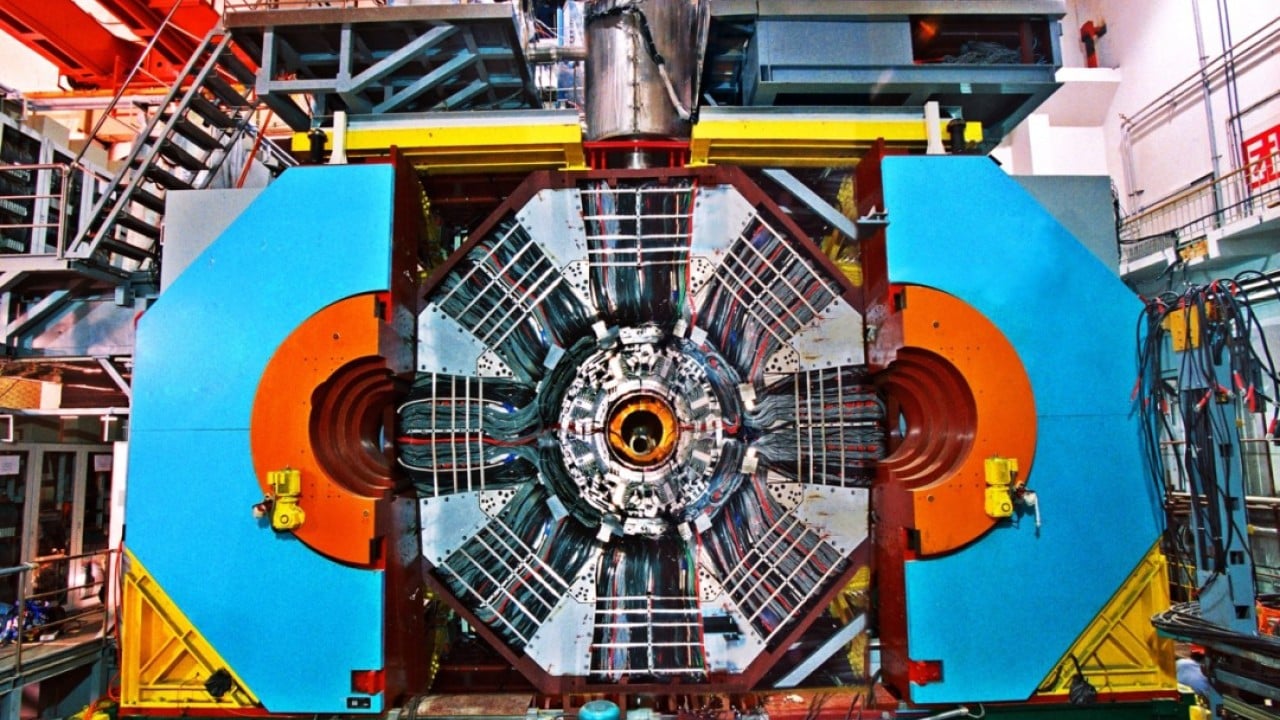
The finding was announced Thursday at the International Conference on High Energy Physics in Natal, Brazil, by a Chinese research team. This discovery is the culmination of 15 years of dedicated research, utilizing the Beijing Electron Positron Collider II to gather definitive evidence, as reported by Guangming Daily.
The collaborative team comprises approximately 700 scientists from 15 different countries. Glueballs are theorized to be made of gluons, which are the fundamental particles that act as force carriers, binding quarks together to form larger particles like protons and neutrons. These, in turn, are the building blocks of atoms and all matter in the universe.
For five decades, scientists have hypothesized that gluons could bind together to form glueballs, a phenomenon distinct from photons. This prediction stemmed from the understanding that gluons attract each other while mediating the strong force. However, concrete evidence remained elusive until this team presented their findings. The researchers used the collider to accelerate electrons and their antiparticles to near light speed, causing them to collide and produce short-lived J/psi particles. The decay of these particles created an ideal environment for detecting glueballs.
DistantNews Editorial
Originally published by South China Morning Post. Summarized and contextualized by our editorial team with added local perspective. Read our editorial standards.
More Stories


From Our Blog

Countries Without a Free Press: What You Need to Know

What Press Freedom Means for the News You Read

What Gets Lost (and Found) When News Is Translated

The Critical Role of Diaspora Media in Global News

What Travellers Should Know About Countries with Restricted Press
