

What is the future of Geography education?
Translated from Malay, summarized and contextualized by DistantNews.
TLDR
- Geography is being marginalized in Malaysia's education system despite its strong STEM components and relevance to current issues like climate change.
- The Ministry of Education's 2027 curriculum revision is seen as an opportunity to rebrand and reintegrate Geography, emphasizing its links to STEM, sustainability, and spatial technology.
- Proposed changes include officially linking Geography to STEM themes, maintaining its offering in upper secondary schools, providing professional development for teachers, and shifting assessments from rote memorization to authentic tasks.
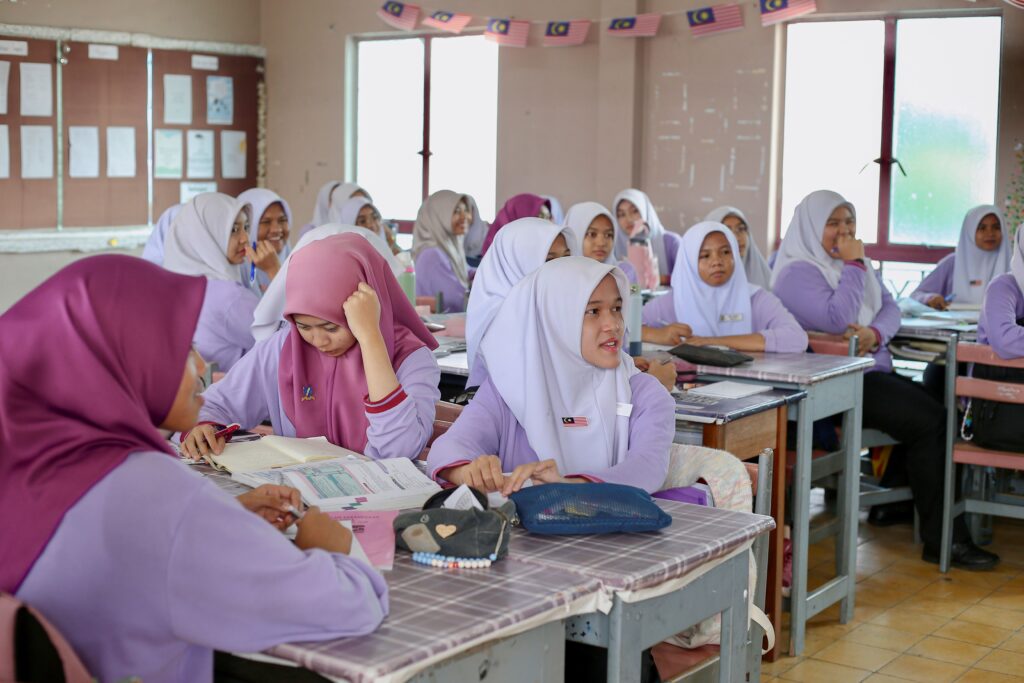
The recent push towards Science, Technology, Engineering, and Mathematics (STEM) education in Malaysia, while commendable in its aim to produce a future-ready generation, has inadvertently sidelined a crucial discipline: Geography. Utusan Malaysia observes with growing concern that Geography's position in the national curriculum is becoming increasingly precarious, with its exclusion from STEM packages and its removal as an elective in many secondary schools.
This marginalization is particularly baffling given Geography's inherent strengths. Far from being a mere subject of memorization, it is a dynamic field that employs scientific methods to study natural phenomena like climate change, floods, and land use. It integrates crucial STEM elements through the use of Geographic Information Systems (GIS), remote sensing, and digital mapping, and even incorporates mathematical principles in data analysis and calculations. The Ministry of Education's upcoming 2027 curriculum reform presents a vital opportunity to rectify this oversight.
Utusan Malaysia strongly advocates for a rebranding and re-recognition of Geography. We propose that it be explicitly linked to STEM in curriculum documents, focusing on themes such as climate change, disaster management, and geospatial technology. Furthermore, its availability as an elective must be secured, and teachers should receive specialized training in areas like GIS and project-based learning. Assessments should evolve from rote learning to practical, real-world problem-solving, such as local flood studies or environmental audits. Renaming it to something like 'Geography and Sustainability' or 'STEM Geography and Disaster Management' would highlight its true interdisciplinary power, showcasing its ability to bridge science, technology, human interaction, and the environment.
DistantNews Editorial
Originally published by Utusan Malaysia in Malay. Translated, summarized, and contextualized by our editorial team with added local perspective. Read our editorial standards.
More Stories


From Our Blog

What Gets Lost (and Found) When News Is Translated

The Critical Role of Diaspora Media in Global News

What Travellers Should Know About Countries with Restricted Press

A Digital Nomad's Guide to Following Local News

How the Same Story Looks Different in Different Countries
