


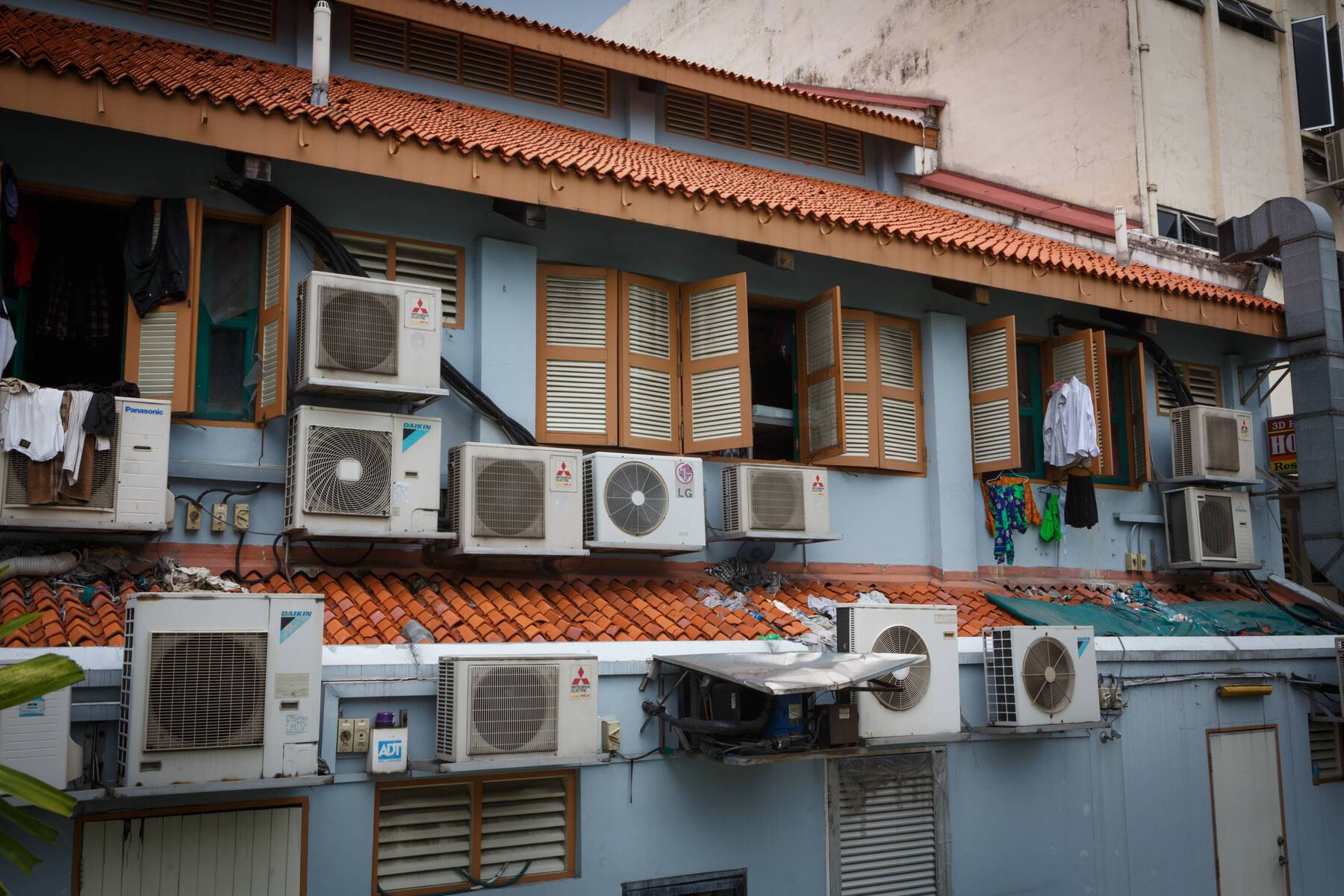
Why Air Conditioners Are Problematic: They Heat Up
Translated from German, summarized and contextualized by DistantNews.
At a glance
Analysis
Sources not specified
Context piece
- A German columnist argues against the effectiveness of climate appeals and moralizing, suggesting technical solutions and adaptation are more viable.
- The article explains the physics of heat transfer, stating that heat naturally flows from warmer to cooler bodies, requiring energy input to reverse this process.
- It critiques air conditioners, not just for their refrigerants but fundamentally for their reliance on the thermodynamic principle of pumping heat, which has implications for energy consumption and local warming.
Appeals for climate repentance and guilt have proven ineffective, according to a German columnist. The author points to the fleeting nature of "flight shame" and the fading momentum of veganism as examples. The piece suggests that focusing on technical solutions like carbon capture and learning to live with existing warming are more practical approaches.
Buy an air conditioner – and don't worry about what the Greens say
The article delves into the physics of heat, referencing the second law of thermodynamics. It explains that heat, as a form of energy, naturally flows from hotter to colder objects. Reversing this flow, as a heat pump or air conditioner does, requires expending work, typically in the form of electrical energy. This fundamental principle is presented as a core issue with air conditioning technology.
Air conditioners, as the climate-conscious European knows, are a sin.
While acknowledging that air conditioners can be technically improved, such as by using less harmful refrigerants, the author contends that their basic operation remains problematic. The act of pumping heat from a cooler space to a warmer one, even if for cooling purposes, inherently involves energy consumption and can contribute to localized heat increase. The piece implies that the widespread adoption of air conditioning, despite its perceived benefits, carries thermodynamic consequences that challenge its role as a simple climate solution.
Why live when you can suffer?
DistantNews Editorial
Originally published by Die Presse in German. Translated, summarized, and contextualized by our editorial team with added local perspective. Read our editorial standards.
More Stories



From Our Blog

What Gets Lost (and Found) When News Is Translated

The Critical Role of Diaspora Media in Global News

What Travellers Should Know About Countries with Restricted Press

A Digital Nomad's Guide to Following Local News

How the Same Story Looks Different in Different Countries
