


2025 Shatters Climate Records: Alarming Report Details Global Warming's Grip
Translated from Polish and summarized by DistantNews. Read the original for the full story.
At a glance
News
Official statement
Outcome reported
- 2025 saw record-breaking global temperatures, with January's average temperature 1.75°C above pre-industrial levels, despite the cooling effect of La Niña.
- The report, based on research from 625 scientists in 60 countries, highlights record greenhouse gas concentrations, including carbon dioxide levels of 425.6 ppm, a 53% increase since pre-industrial times.
- Oceans experienced record heat and rising sea levels, while the Arctic saw its second-warmest year and the Antarctic its warmest on record, with significant glacier melt.
The year 2025 proved to be a grim milestone in the ongoing climate crisis, with a comprehensive report detailing a cascade of alarming global records. Despite the presence of the La Niña phenomenon, which typically brings cooling effects, January's average global temperature surged to 1.75°C above pre-industrial levels. La Niña appeared twice in 2025, yet failed to significantly mitigate the escalating impacts of climate change.
The "State of the Climate" report, compiled by 625 scientists from 60 countries and summarized by the American Meteorological Society, revealed unprecedented levels of greenhouse gases. Carbon dioxide concentrations reached 425.6 ppm, a staggering 53% increase compared to the pre-industrial era's approximately 278 ppm. Emissions from fossil fuels also hit a new high, reaching 10.3 petagrams of carbon annually, more than triple the amount recorded in the 1960s.
Extreme temperatures were a global phenomenon in 2025. Both land and ocean temperatures ranked among the three highest ever recorded. Europe experienced its warmest year on record, while Russia, China, South Korea, and Argentina faced their second-warmest years. Even with moderate ENSO and La Niña conditions influencing oceans for the full year, sea surface temperatures remained exceptionally high. Approximately 87% of ocean surfaces endured at least one marine heatwave, with only 26% experiencing a cooling period.
Global ocean heat content and average sea level also reached record highs. The sea level has now broken records for 14 consecutive years, reaching about 111.2 millimeters above the 1993 average. Since 2005, ocean warming has contributed an average of 1.6 millimeters annually to this rise, with melting glaciers adding another 2 millimeters.
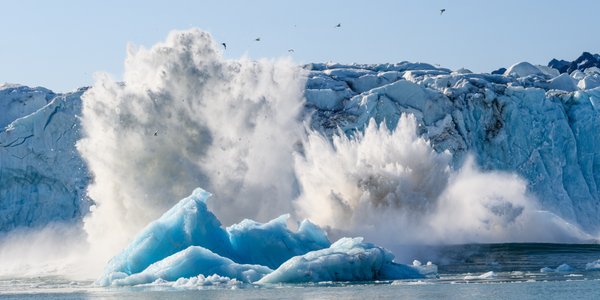
The Arctic experienced its second-warmest year in 126 years of record-keeping, with air temperatures rising about three times faster than the global average. Arctic sea ice extent hit a 47-year low, with four-year-old ice becoming virtually non-existent by September 2025. In stark contrast, the Antarctic recorded its warmest year since measurements began in 1979, with above-average surface melt.
About this summary
Originally published by Rzeczpospolita in Polish. Translated, summarized, and contextualized automatically by DistantNews, with a note on how the source frames the story. Not individually reviewed before publishing. How this works.
More Stories



From Our Blog

What Gets Lost (and Found) When News Is Translated

The Critical Role of Diaspora Media in Global News

What Travellers Should Know About Countries with Restricted Press

A Digital Nomad's Guide to Following Local News

How the Same Story Looks Different in Different Countries
