


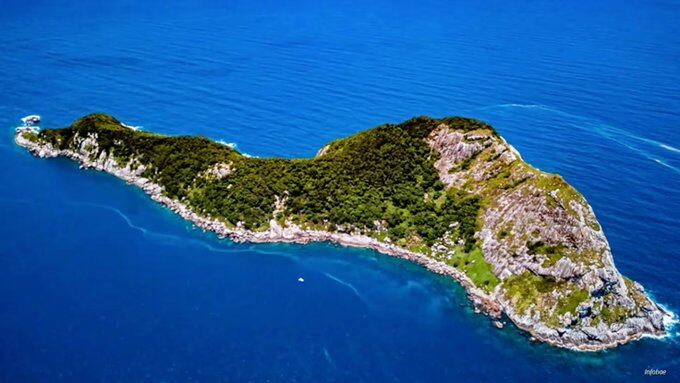
A YouTuber entered one of the world's most dangerous islands, full of cobras
Translated from Spanish, summarized and contextualized by DistantNews.
TLDR
- YouTuber Miles Routledge, known as Lord Miles, illegally entered Brazil's Ilha da Queimada Grande, also known as "Snake Island," to film content for his channel.
- Despite the island's reputation as one of the world's deadliest due to its high population of venomous snakes, Routledge claimed he encountered fewer snakes than expected and felt his safety was not significantly threatened.
- His unauthorized visit, which bypassed strict access restrictions for scientists, has reignited debate on the ethical boundaries of digital content creation and the risks of unsupervised adventure.
The recent unauthorized expedition by YouTuber Miles Routledge, or Lord Miles, to Brazil's Ilha da Queimada Grande, infamously known as "Snake Island," has sparked considerable controversy. This rocky outcrop off the coast of São Paulo is renowned for its extreme danger, housing thousands of golden lancehead vipers, a species with highly potent venom. Access to the island is strictly prohibited, reserved only for a select few scientists and researchers under rigorous medical supervision, making Routledge's stunt a blatant disregard for safety regulations and ecological preservation.
I have to be honest with you, many times documentaries make things look scarier than they are, this place is not that bad.
Routledge's narrative, however, contrasts sharply with the island's deadly reputation. He claimed to have found fewer snakes than anticipated and downplayed the peril, even stating that "documentaries make things look scarier than they are." This assertion, made while wearing a medieval-inspired armor, stands in stark opposition to expert warnings. Biologists like Bryan Fry have unequivocally stated that any direct encounter with the island's vipers is potentially fatal. The stark difference between Routledge's experience and the scientific consensus highlights the potential for sensationalism in online content creation, often prioritizing shock value over factual representation.
The biologist Bryan Fry warned that any direct encounter with the island's specimens results in a fatal and inevitable outcome.
This incident raises critical questions about the ethics of adventure content and the responsibility of platforms like YouTube. While Routledge managed to return without injury, his actions endangered himself and potentially the island's unique ecosystem. The Brazilian authorities maintain strict control over the area, underscoring the illegality of his visit. This event serves as a potent reminder of the fine line between daring exploration and reckless endangerment, particularly when driven by the pursuit of online fame. The contrast between Routledge's casual approach and the serious risks acknowledged by experts and locals alike underscores the unique perspective from Brazil, where the island's danger is a well-understood local reality, often embellished by folklore but grounded in genuine peril.
Brown recalled that the locals avoid the islet for fear of legends about pirates and treasures guarded by venomous snakes.
DistantNews Editorial
Originally published by La Nación in Spanish. Translated, summarized, and contextualized by our editorial team with added local perspective. Read our editorial standards.
More Stories



From Our Blog

What Gets Lost (and Found) When News Is Translated

The Critical Role of Diaspora Media in Global News

What Travellers Should Know About Countries with Restricted Press

A Digital Nomad's Guide to Following Local News

How the Same Story Looks Different in Different Countries
