


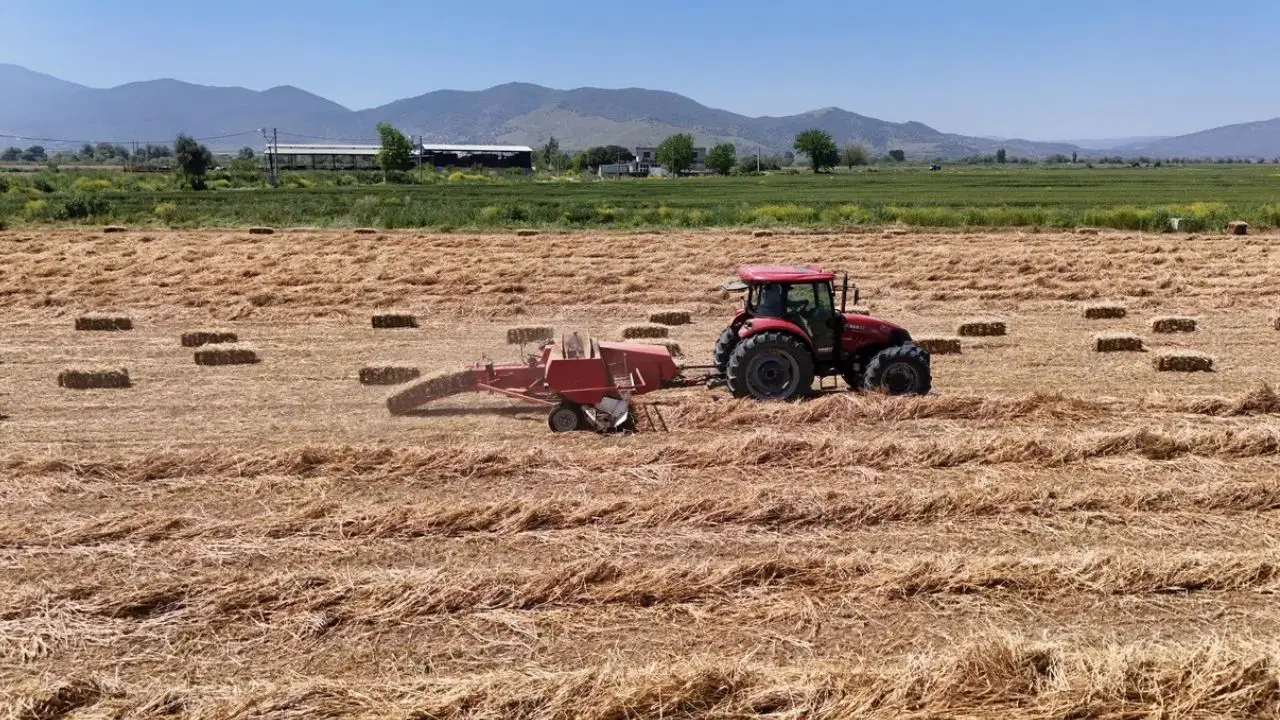
Baling season begins in Aydın: Last year 150 lira, this year 300 lira
Translated from Turkish, summarized and contextualized by DistantNews.
TLDR
- Farmers in Aydın, Turkey, have begun the baling season for fodder crops following the grain harvest.
- Producers are facing challenges with labor shortages and high costs for fuel and fertilizer, impacting pricing.
- Despite cost pressures, farmers are hopeful for a better yield this year due to favorable rainfall, with baled fodder prices potentially doubling from last year.
In the heart of Turkey's agricultural landscape, the familiar rhythm of the harvest season in Aydın is underway, bringing with it the crucial 'balya' – or fodder baling – season. As grain harvests conclude, farmers like Taner İçöz, the headman of Kahraman Mahallesi in Çine, are immersed in the demanding work of collecting and baling feed for livestock. This year, the rains have been a blessing, offering a much-needed respite after a difficult, dry season last year. The fields are yielding a good crop, a sight that brings a measure of relief and optimism to the farming community.
This year, at least, the rains have been good. Our crops are very good. We will plant corn after these are harvested. Milk corn is planted in our regions. We also grow dry corn. Some people grow tomatoes. After these are removed, we will start working our lands. At least we don't have a water problem. Thank God. At least that makes us happy right now.
However, the optimism is tempered by significant challenges. The rising costs of essential inputs like fuel and fertilizer have dramatically increased the expense of farming operations. Compounding this is the persistent difficulty in finding agricultural labor, a problem that plagues many rural areas. These factors create a complex economic environment where farmers are uncertain about the final prices they will receive for their hard work. The cost of baling, for instance, is being considered at 250-300 lira per bale, a stark increase from last year's 150 lira, reflecting the heightened operational expenses.
We are thinking of 300 lira right now, but there is no set price yet.
This year's shift towards wheat and oats for baling, moving away from traditional barley, highlights an adaptation to the needs of livestock and potentially better yields. While the local perspective values these agricultural efforts and the resilience of the farming community, international coverage might focus solely on the price increases. Here in Aydın, it's about more than just the cost; it's about the land, the weather, the labor, and the enduring spirit of those who feed the nation. The uncertainty of pricing is a significant concern, but the promise of a good harvest, thanks to the timely rains, offers a glimmer of hope for a more prosperous season ahead.
Last year, the bale prices were 150 lira in our area. We are currently thinking of 250-300 lira for a bale of hay.
DistantNews Editorial
Originally published by Cumhuriyet in Turkish. Translated, summarized, and contextualized by our editorial team with added local perspective. Read our editorial standards.
More Stories
From Our Blog

What Gets Lost (and Found) When News Is Translated

The Critical Role of Diaspora Media in Global News

What Travellers Should Know About Countries with Restricted Press

A Digital Nomad's Guide to Following Local News

How the Same Story Looks Different in Different Countries
