


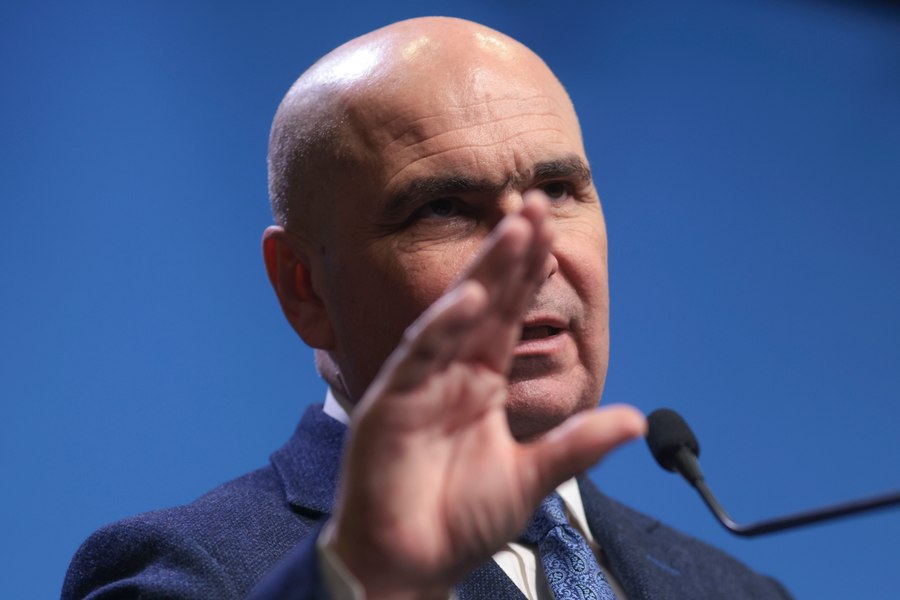
Bolojan says he tried to stop the plundering of public money: 'I discovered hidden larders and turned on the light in government'
Translated from Romanian, summarized and contextualized by DistantNews.
TLDR
- Romanian Prime Minister Ilie Bolojan stated that state budgets have been misused by inefficient administrations, likening it to a 'piggy bank' for special interests.
- He explained that unpopular economic measures were necessary to correct Romania's deficit and avoid the suspension of European funds.
- Bolojan also addressed internal coalition tensions, noting that some partners publicly diverged from agreed-upon positions regarding austerity and administrative reforms.
Prime Minister Ilie Bolojan has spoken out forcefully against the historical misuse of Romania's state budget, describing it as a 'piggy bank' that has been plundered by inefficient local and central administrations serving vested interests. In a candid interview with Rock FM, Bolojan detailed the immense pressure to adopt unpopular economic measures, emphasizing their necessity to demonstrate fiscal responsibility to the European Commission and prevent the suspension of crucial EU funds.
Over the years, the state budget has been used discretionarily by inefficient local and central administrations, being treated like a 'piggy bank' from which various interests were constantly fed.
Bolojan acknowledged the political friction generated by these austerity measures and the ongoing administrative reforms. He pointed to a growing divide within the governing coalition, where some partners have adopted public stances contrary to their private agreements. This internal discord, he suggested, fuels a narrative that undermines the government's efforts, creating a 'drama' that benefits opposition elements even from within the ruling alliance. The Prime Minister framed these reforms as a necessary intervention to 'turn on the light' in government, exposing hidden inefficiencies and challenging the old ways of securing funds through political influence.
There were very high pressures to adopt a first package of measures to show the European Commission that Romania is correcting its deficit. Otherwise, we risked the suspension of European funds, which would have created major difficulties.
He specifically highlighted the entrenched system in local administrations, where political connections and preferential fund allocations have long prevailed. Bolojan asserted that attempts to curb this practice, along with efforts to combat tax evasion, reduce waste in state-owned companies, and improve corporate governance, have met significant resistance. The Prime Minister's determination to halt the 'plundering of public money' and introduce genuine corporate governance principles has apparently unsettled established power bases, where management selections were often based on political loyalty rather than merit.
We were adopting measures that were not popular, which invalidated the theory that if someone votes for us, we have a horn of plenty from which we solve all the citizens' desires, this drama of opposition from within the government began to play out.
From the perspective of Adevărul, a leading Romanian publication, Bolojan's statements offer a critical insight into the challenges of governing Romania. The Prime Minister's frank admission of internal coalition struggles and his strong stance against corruption and inefficiency resonate with a public weary of political maneuvering and economic mismanagement. His narrative of uncovering 'hidden larders' and shining a light on corrupt practices positions him as a reformer battling entrenched interests. This framing is particularly significant in Romania, where the effective use of public funds and the integrity of state institutions are constant concerns. Bolojan's efforts, while unpopular, are presented as essential steps toward fiscal health and a more accountable government, a perspective that aligns with the publication's commitment to shedding light on critical national issues.
I started to check where the problems are in governance, to discover the hidden larders that are not in order and to turn on the light. This generated some problems.
DistantNews Editorial
Originally published by Adevărul in Romanian. Translated, summarized, and contextualized by our editorial team with added local perspective. Read our editorial standards.
More Stories

From Our Blog

What Gets Lost (and Found) When News Is Translated

The Critical Role of Diaspora Media in Global News

What Travellers Should Know About Countries with Restricted Press

A Digital Nomad's Guide to Following Local News

How the Same Story Looks Different in Different Countries
