

Budget Spending Rises, Food Exports Under Pressure, Chip Producers Soar
Translated from Polish, summarized and contextualized by DistantNews.
TLDR
- Public spending in Poland reached nearly 51% of GDP in 2025, alarming economists due to rising deficits and debt, primarily driven by social expenditures.
- Polish food exports are shifting direction, with Germany reducing purchases and new markets like France, Belgium, and Africa gaining importance, while exports to Russia surprisingly increased by 15%.
- The US and EU have launched a joint plan to secure critical raw material supply chains amid global economic competition and geopolitical tensions, while the semiconductor sector is experiencing a boom driven by AI investments.
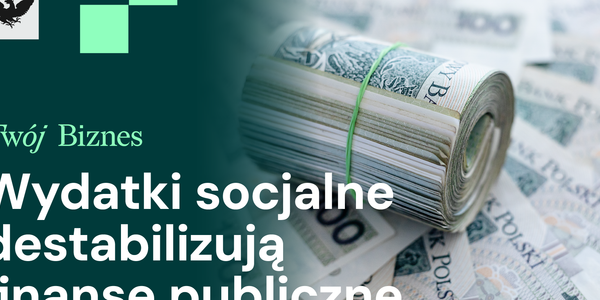
In Poland, economic discourse is currently dominated by concerns over escalating public spending, which has alarmingly reached nearly 51% of GDP in 2025. This trend, as highlighted by Janusz Jankowiak, chief economist at the Polish Business Council, signals a growing deficit and public debt problem. While state revenues are robust, they are outpaced by expenditures, particularly social spending which now accounts for nearly 20% of GDP. Without significant reforms, projections suggest Poland's debt could exceed 70% of GDP, a stark warning that resonates deeply within our national economic strategy. The Polish perspective emphasizes the need for fiscal prudence and sustainable growth, questioning the long-term viability of current spending patterns.
Simultaneously, the landscape of Polish food exports is undergoing a significant transformation. The traditional reliance on Germany as a primary trading partner is diminishing, forcing producers to explore new avenues in France, Belgium, the Netherlands, and even African markets. This strategic pivot is not merely a response to market shifts but a testament to the adaptability and resilience of Polish agriculture and food producers. The surprising 15% year-on-year increase in food exports to Russia, while seemingly counterintuitive given geopolitical complexities, underscores the intricate and often unpredictable nature of international trade. From a Polish viewpoint, this diversification is crucial for economic stability and reducing vulnerability to the policies of any single major trading partner.
The problem of growing deficit and public debt is becoming increasingly serious.
The global economic stage also presents a complex picture for Poland. The joint initiative by the US and EU to secure critical raw material supply chains is a significant development, reflecting a broader trend of nations seeking to mitigate dependencies, particularly on China. This move towards greater self-sufficiency and strategic alliances is something we observe closely, as it impacts global trade dynamics and investment flows. In contrast, the booming semiconductor sector, fueled by artificial intelligence, offers a glimpse into future economic growth areas. However, for Poland, the immediate focus remains on managing domestic fiscal challenges and navigating the evolving international trade environment to ensure continued economic prosperity and security.
Twój Biznes is a daily economic podcast created by the editorial teams of Rzeczpospolita and Parkiet.
DistantNews Editorial
Originally published by Rzeczpospolita in Polish. Translated, summarized, and contextualized by our editorial team with added local perspective. Read our editorial standards.
More Stories


From Our Blog

What Gets Lost (and Found) When News Is Translated

The Critical Role of Diaspora Media in Global News

What Travellers Should Know About Countries with Restricted Press

A Digital Nomad's Guide to Following Local News

How the Same Story Looks Different in Different Countries
