


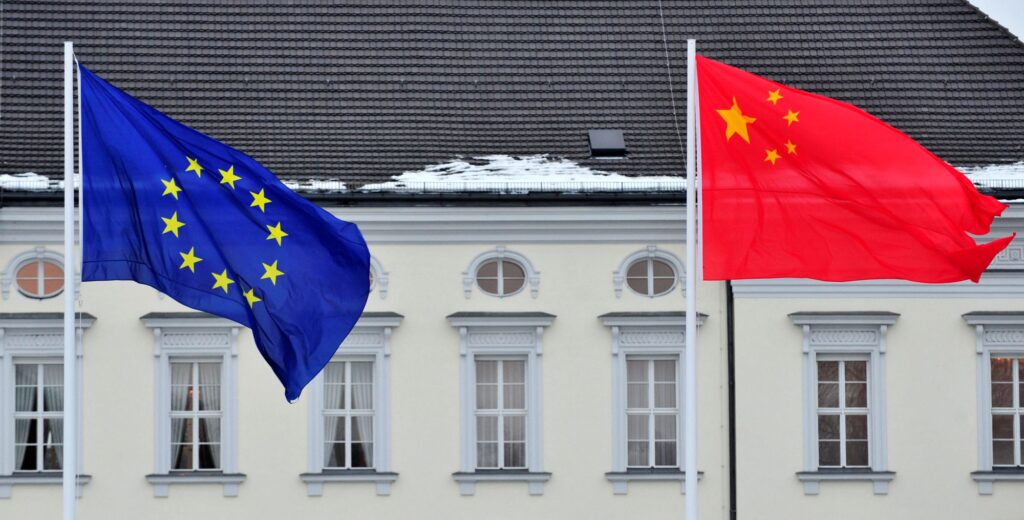
China Denounces EU's 'Made in Europe' Policy, Threatens Retaliation
Translated from Malay, summarized and contextualized by DistantNews.
TLDR
- Beijing has condemned the European Union's 'Made in Europe' policy, warning of potential retaliatory measures.
- The EU policy requires companies seeking public funding in strategic sectors to meet a minimum percentage of EU-made components.
- China views the policy as systemic discrimination and a threat to Chinese companies' interests, particularly in sectors like electric vehicles and batteries.
China has issued a strong rebuke to the European Union's new 'Made in Europe' policy, labeling it as systemic discrimination and warning of potential retaliatory actions. The policy, introduced in March, mandates that companies seeking public funding in strategic sectors such as automotive, green technology, and steel must ensure a minimum percentage of their components are manufactured within the EU.
Beijing's Ministry of Commerce expressed 'serious concerns' to the European Commission, stating that if the EU proceeds with this legislation and it harms Chinese companies' interests, China will be compelled to take countermeasures. This move by the EU is part of its broader strategy to bolster European industries against global competition, reduce manufacturing sector decline, and prevent job losses. However, China perceives it as a protectionist measure that unfairly targets its companies, which have long complained about facing unequal competition from Chinese rivals heavily subsidized by their government.
The 'Made in Europe' initiative, officially known as the Industrial Acceleration Act, indirectly targets manufacturers of electric vehicles and batteries from China. It requires foreign firms to collaborate with European companies and share technological knowledge when operating within the bloc. From China's perspective, this policy represents a significant hurdle to fair trade and cooperation, potentially disrupting the supply chains and market access that Chinese businesses have established. The threat of retaliation underscores the escalating trade tensions between China and the EU, highlighting a divergence in their approaches to industrial policy and global economic integration.
If the EU continues to implement this law and further harms the interests of Chinese companies, Beijing will have no choice but to take retaliatory action to protect the rights and interests of its companies.
DistantNews Editorial
Originally published by Utusan Malaysia in Malay. Translated, summarized, and contextualized by our editorial team with added local perspective. Read our editorial standards.
More Stories


From Our Blog

What Gets Lost (and Found) When News Is Translated

The Critical Role of Diaspora Media in Global News

What Travellers Should Know About Countries with Restricted Press

A Digital Nomad's Guide to Following Local News

How the Same Story Looks Different in Different Countries
