


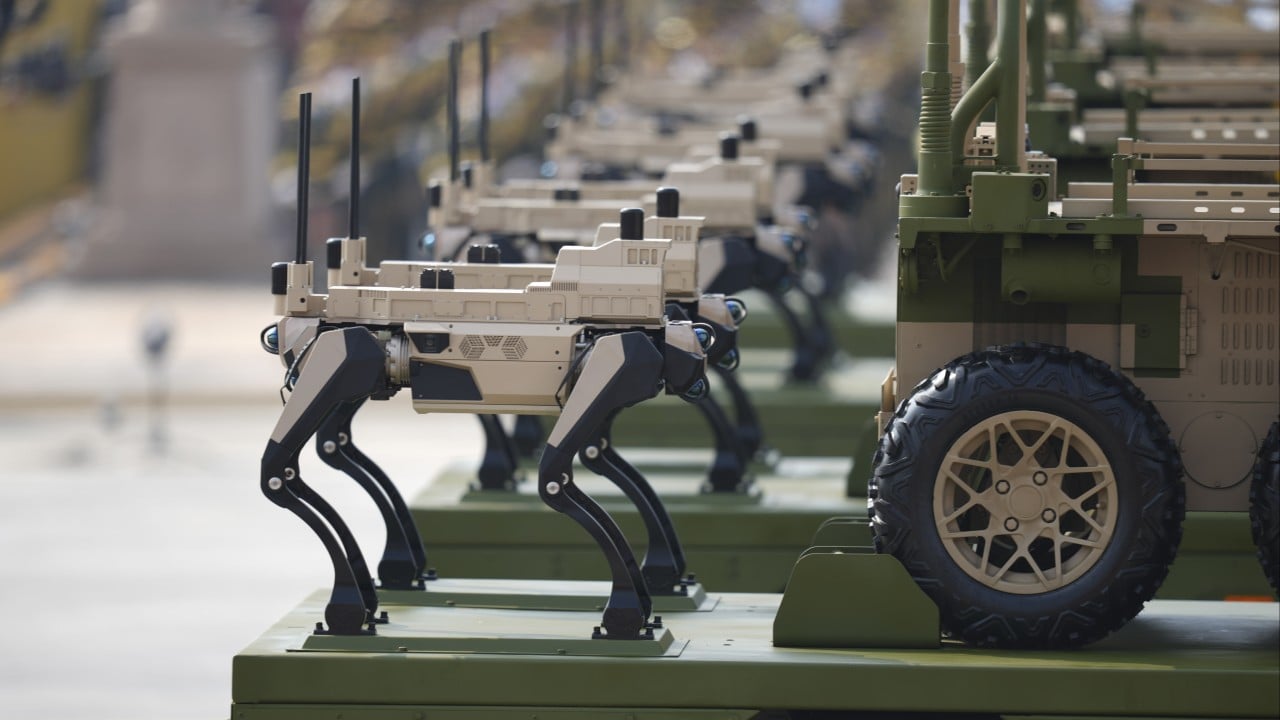
China military general calls for more private sector role to counter Western sanctions
Translated from English, summarized and contextualized by DistantNews.
TLDR
- A top Chinese military official urged greater private sector involvement in defense research to counter Western sanctions.
- The official highlighted the need to master critical technologies like semiconductors and AI, and emerging fields such as quantum computing.
- The call aims to prevent Western restrictions from hindering China's future defense innovation and technological growth.
From Beijing's perspective, the United States and its allies are employing increasingly sophisticated tactics to stifle China's technological advancement, particularly in defense. General Zhang Zhan of the People's Liberation Army's National University of Defence Technology articulates a clear strategy: China must leverage its private sector more effectively to overcome these "choke points." This isn't just about maintaining current capabilities; it's about securing future growth and ensuring national security in an era of intense technological competition. The focus on semiconductors, AI, and quantum computing underscores China's ambition to achieve self-sufficiency in critical high-tech sectors, a move seen as essential for its long-term development and global standing. The Study Times, a publication of the Central Party School, lends significant weight to this call, signaling that these concerns are being addressed at the highest levels of the Communist Party. The narrative emphasizes resilience and innovation in the face of external pressure, framing it as a necessary step for China to "thoroughly reverse the situation of being choked by others."
Western technical restrictions are becoming increasingly surgical, with the strategic focus shifting from ‘choking current operations’ to ‘strangling future growth’
DistantNews Editorial
Originally published by South China Morning Post in English. Translated, summarized, and contextualized by our editorial team with added local perspective. Read our editorial standards.
More Stories


From Our Blog

Countries Without a Free Press: What You Need to Know

What Press Freedom Means for the News You Read

What Gets Lost (and Found) When News Is Translated

The Critical Role of Diaspora Media in Global News

What Travellers Should Know About Countries with Restricted Press
