


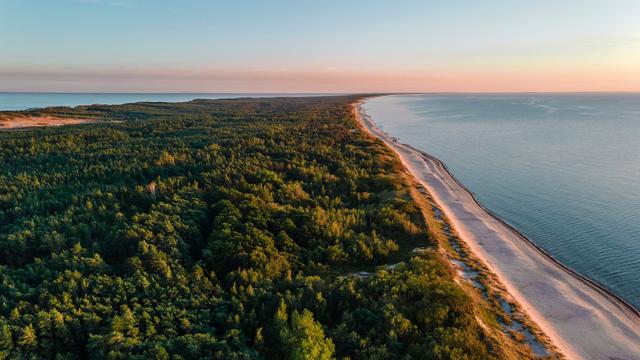
Curonian Spit: A Peaceful Paradise on Europe's Tense Border
Translated from German, summarized and contextualized by DistantNews.
TLDR
- The Curonian Spit, a popular holiday destination, lies on one of Europe's most heavily fortified borders.
- This narrow strip of land separates NATO territory from Russia, creating a unique geopolitical tension in a seemingly peaceful paradise.
- The area, known for its natural beauty, features dunes, pine forests, and the Baltic Sea, contrasting sharply with its strategic significance.
The Curonian Spit, a breathtaking natural wonder famed for its pristine beaches and tranquil atmosphere, harbors a stark geopolitical reality: it is bisected by one of Europe's most formidable borders. This slender peninsula, stretching nearly a hundred kilometers, offers a unique juxtaposition of idyllic vacationing and high-stakes territorial division, where the territories of NATO and Russia converge.
Nida, once known as Nidden, stands as a testament to the enduring charm of this region. The sun glints off the waves of the Baltic Sea, the gentle rustling of leaves in the pine and birch forests fills the air, and the vast expanse of white sand beaches invites contemplation. Yet, beneath this serene facade lies a critical geopolitical fault line, a place where the calm waters of the lagoon meet the strategic imperatives of two major powers.
This geographical anomaly transforms a holiday paradise into a point of geopolitical significance. The proximity of NATO and Russian territories creates an undercurrent of tension, a reminder that even the most peaceful landscapes can be shaped by global political dynamics. The Curonian Spit thus serves as a potent symbol of the complex interplay between natural beauty and international relations, a place where one can simultaneously experience the tranquility of nature and the palpable presence of geopolitical boundaries.
DistantNews Editorial
Originally published by Die Zeit in German. Translated, summarized, and contextualized by our editorial team with added local perspective. Read our editorial standards.
More Stories
From Our Blog

What Gets Lost (and Found) When News Is Translated

How the Same Story Looks Different in Different Countries

The Critical Role of Diaspora Media in Global News

What Travellers Should Know About Countries with Restricted Press

A Digital Nomad's Guide to Following Local News
