

Economic Migration Crucial for Poland's Growth, Businesses Urge Stable Framework
Translated from Polish, summarized and contextualized by DistantNews.
TLDR
- Poland's economic growth and pension system rely heavily on foreign labor, with an estimated one million to 2.5 million foreigners working in the country.
- Businesses, including McDonald's and Ikea, emphasize the necessity of economic migration for their operations and integration efforts, despite bureaucratic hurdles.
- A debate at the European Economic Congress highlighted the need for stable legal frameworks, faster procedures, and a shift from emotional discourse to fact-based discussion on economic migration.
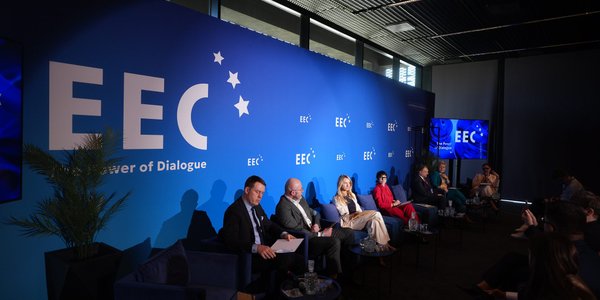
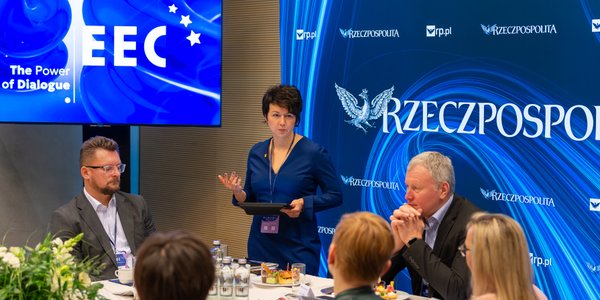
As a leading voice in Polish business and economics, Rzeczpospolita recognizes that the nation's continued growth and the stability of our social systems are inextricably linked to economic migration. The recent European Economic Congress, co-hosted by "Rzeczpospolita" and McDonald's Polska, underscored this crucial point. Our report, "Migration in Poland. Facts, Impact, Directions for Action," served as a foundation for a vital discussion: economic migration is not a temporary phenomenon but a permanent fixture of our labor market, and it's time for the state to create a supportive, fact-based environment.
The discussion about economic immigration in Poland should be based on facts, not on stereotypes and emotions.
The numbers are clear. Foreign workers constitute a significant portion of our workforce, estimated between 6% and 10%, contributing substantially to our GDP – potentially between 200 and 400 billion Polish zloty cumulatively. They are not just laborers; they are consumers, as evidenced by McDonald's reporting that migrants make up 5-10% of their customers. Crucially, they are also vital to the sustainability of our pension system, injecting youth and contributions that offset our demographic challenges. Without them, Polish pensions would be lower.
We are already talking about about a million foreigners working in Poland, but realistically there could be as many as 2.5 million. That's 6 to 10 percent of all workers.
Businesses like McDonald's and Ikea are on the front lines, experiencing firsthand the benefits and the challenges. While they actively engage in integration programs, offering language courses and legal support, they also grapple with bureaucratic complexities. Ikea, for instance, often relies on employment agencies to navigate the system. This highlights a critical gap: the business sector is ready and willing to integrate, but the state's infrastructure for managing economic migration remains underdeveloped. We need streamlined procedures and a long-term strategy, not just stop-gap measures.
We estimate that the contribution of foreigners to the Polish GDP is from 5 to over 10 percent, which is from 200 to 400 billion PLN cumulatively.
It is imperative that the public discourse shifts from stereotypes and emotional reactions to a data-driven understanding of economic migration's role. "Rzeczpospolita" is committed to fostering this informed debate, recognizing that a stable, growing Poland requires a pragmatic and welcoming approach to the foreign workers who are essential to our economy and our future.
Foreigners are rejuvenating the social security system. If it weren't for them, our pensions would be lower.
DistantNews Editorial
Originally published by Rzeczpospolita in Polish. Translated, summarized, and contextualized by our editorial team with added local perspective. Read our editorial standards.
More Stories



From Our Blog

What Gets Lost (and Found) When News Is Translated

The Critical Role of Diaspora Media in Global News

What Travellers Should Know About Countries with Restricted Press

A Digital Nomad's Guide to Following Local News

How the Same Story Looks Different in Different Countries
